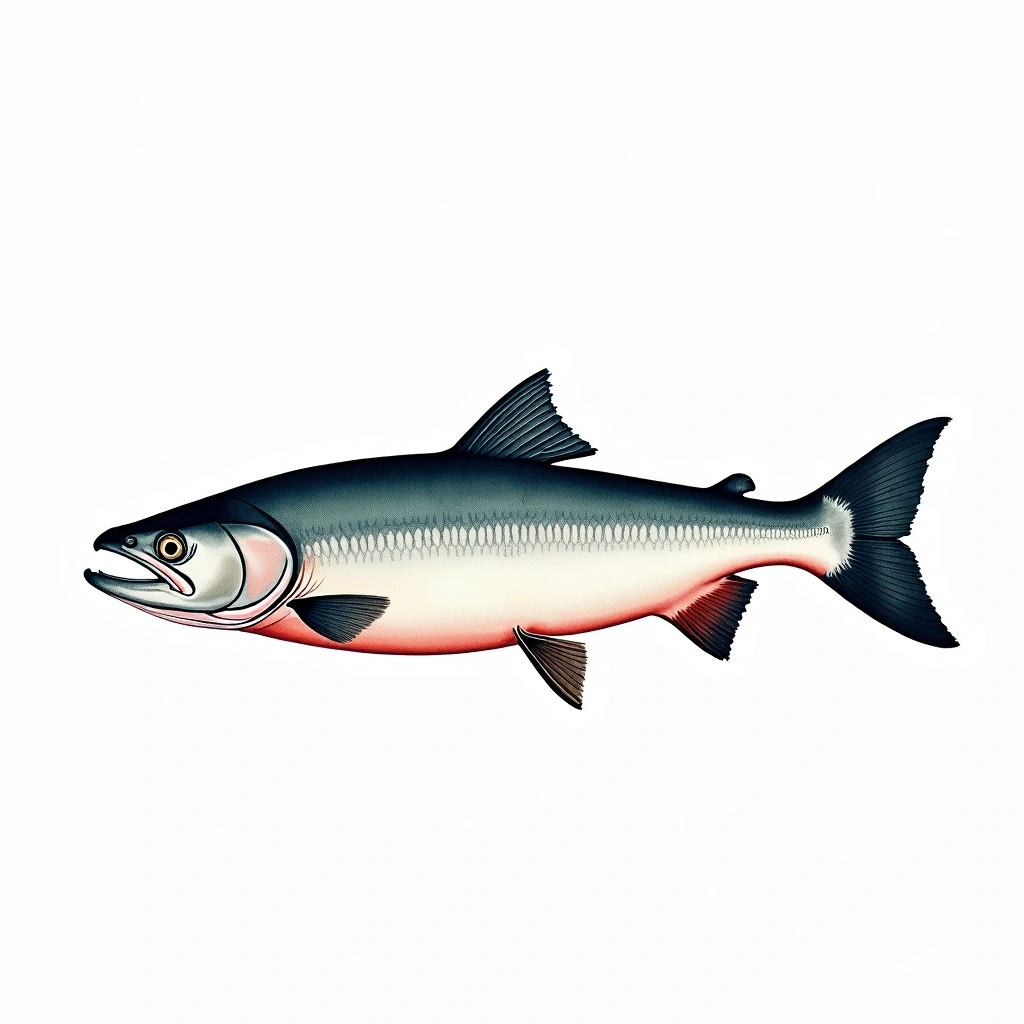
Salmón real
Oncorhynchus tshawytscha
Embed This Widget
Add the script tag and a data attribute to embed this widget.
<script src="https://cdn.jsdelivr.net/npm/fishfyi-embed@1/dist/embed.min.js" defer></script>
<div data-fishfyi="fish" data-slug="chinook-salmon"></div>Embed via iframe for maximum compatibility.
<iframe src="https://fishfyi.com/iframe/fish/chinook-salmon/" width="420" height="400" frameborder="0" style="border:0;border-radius:10px;max-width:100%" loading="lazy"></iframe>Paste this URL in WordPress, Medium, or any oEmbed-compatible platform.
https://fishfyi.com/fish/chinook-salmon/Add a dynamic SVG badge to your README or docs.
[](https://fishfyi.com/fish/chinook-salmon/)Use the native HTML custom element.
<script src="https://cdn.jsdelivr.net/npm/fishfyi-embed@1/dist/embed.min.js" defer></script>
<fishfyi-fish slug="chinook-salmon"></fishfyi-fish>Overview
Largest of the Pacific salmons, the chinook, or king salmon, reaches 1.5 metres and returns from the sea to spawn a single time before dying, its carcass fertilising the whole watershed. Ocean-phase fish are deep blue-green above with silvery flanks and black-spotted backs and tails, turning dark red to olive-brown as they mature upstream. Runs ascend major systems such as the Columbia, Yukon, and Sacramento across the Pacific Rim from California to Kamchatka, Japan, and Korea. Its exceptionally rich, deep orange-red flesh sets the benchmark for Pacific salmon quality, superb grilled, smoked, or cured. The species overall is assessed as Least Concern, though certain runs are severely depleted.
On this page
Acerca de
El salmón real, también conocido como salmón chinook, es el mayor de las especies de salmón del Pacífico. Realiza migraciones épicas desde el océano hasta su río natal para desovar una sola vez antes de morir, aportando nutrientes a todo el ecosistema de la cuenca.
Physical Description
| Measurement | Value |
|---|---|
| Maximum Length | 150,0 cm |
| Maximum Weight | 61,4 kg |
| Rango de Profundidad | 0-375m |
Coloration
En fase oceánica presenta un dorso azul-verde intenso con flancos plateados y vientre blanco; manchas negras irregulares en el dorso, la aleta dorsal y ambos lóbulos de la cola; los adultos en desove se tornan de rojo oscuro a marrón oliva.
Habitat & Distribution
Anádromo; desova en ríos fríos y claros de la costa del Pacífico (de Alaska a California). Los adultos pasan de 1 a 5 años en el océano Pacífico antes de regresar a sus arroyos natales. La mayor especie de salmón del Pacífico.
Distribución Geográfica
Cuenca del Pacífico, desde California y Oregón hacia el norte a través de Alaska y las islas Aleutianas hasta la península de Kamchatka, Japón y Corea. Las corridas anádromas usan grandes sistemas fluviales como los ríos Columbia, Yukón y Sacramento.
Países
Distribution Map
Conservation Status
Salmón real is classified as Least Concern by the International Union for Conservation of Nature (IUCN).
Comestibilidad y Gastronomía
Información de Pesca
Taxonomy
| Orden | Salmoniformes (Salmon and trout) |
| Familia | Salmonidae (Salmons and trouts) |
| Especies | Oncorhynchus tshawytscha |
Names in Other Languages
| Language | Name |
|---|---|
| French | Saumon royal |
| Spanish | Salmón real |
Preguntas Frecuentes
Can you eat Salmón real?
How big does Salmón real get?
Where is Salmón real found?
Is Salmón real endangered?
What family does Salmón real belong to?
Similar Fish
Other species in the Salmonidae family
External Databases
Explore More
Fish Rankings
Discover the largest, heaviest, and most exciting fish species
Nature FYI Family
Explore more wildlife and biodiversity encyclopedias