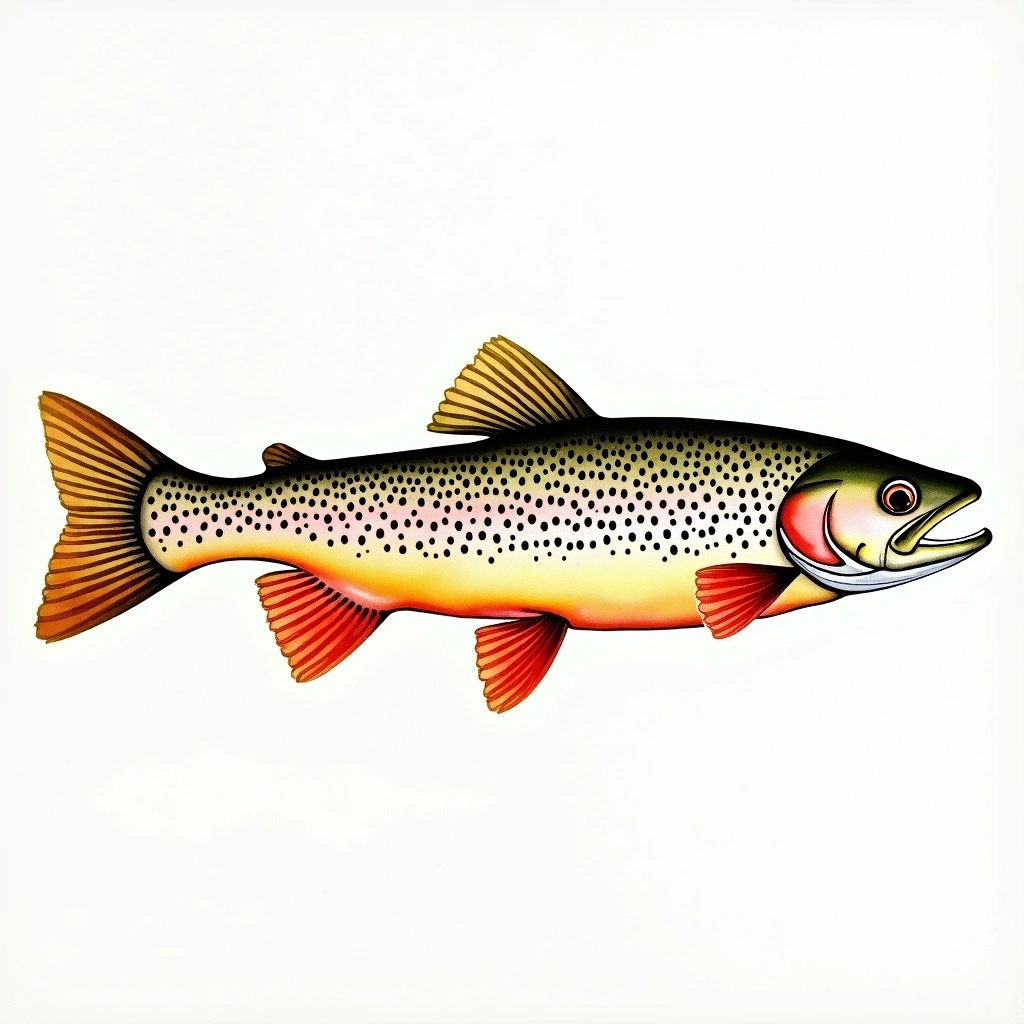
Trucha de arroyo
Salvelinus fontinalis
Embed This Widget
Add the script tag and a data attribute to embed this widget.
<script src="https://cdn.jsdelivr.net/npm/fishfyi-embed@1/dist/embed.min.js" defer></script>
<div data-fishfyi="fish" data-slug="brook-trout"></div>Embed via iframe for maximum compatibility.
<iframe src="https://fishfyi.com/iframe/fish/brook-trout/" width="420" height="400" frameborder="0" style="border:0;border-radius:10px;max-width:100%" loading="lazy"></iframe>Paste this URL in WordPress, Medium, or any oEmbed-compatible platform.
https://fishfyi.com/fish/brook-trout/Add a dynamic SVG badge to your README or docs.
[](https://fishfyi.com/fish/brook-trout/)Use the native HTML custom element.
<script src="https://cdn.jsdelivr.net/npm/fishfyi-embed@1/dist/embed.min.js" defer></script>
<fishfyi-fish slug="brook-trout"></fishfyi-fish>Overview
Despite its name, the brook trout is a char, native to cold, clean streams and lakes of eastern North America and the Great Lakes basin. Its olive-green back carries distinctive worm-like vermiculations, while red spots ringed with blue halos and orange lower fins edged in black and white mark the flanks. Highly sensitive to pollution and warming, it demands well-oxygenated water between roughly 8 and 18 degrees Celsius over gravel and cobble. Native to Appalachian and boreal rivers, it has been introduced widely, and sea-run populations occur along the Atlantic coast. Its delicate, sweet, nutty flesh is among the most prized freshwater table fishes in North America, and the species is assessed as Least Concern.
On this page
Acerca de
La trucha de arroyo es en realidad un salvelino, nativo de arroyos fríos y limpios del este de Norteamérica. Su cuerpo verde oliva con marcas distintivas en forma de gusano (vermiculaciones) y manchas rojas con halos azules la convierten en uno de los peces de agua dulce más hermosos.
Physical Description
| Measurement | Value |
|---|---|
| Maximum Length | 86,0 cm |
| Maximum Weight | 6,6 kg |
| Rango de Profundidad | 15-27m |
Coloration
Dorso verde oliva con distintivas vermiculaciones amarillentas en forma de gusano; los flancos están salpicados de manchas rojas rodeadas de halos azules; las aletas inferiores son de un rojo anaranjado con marcados bordes anteriores negros y blancos.
Habitat & Distribution
Arroyos y lagos de montaña claros y fríos del este de Norteamérica y la cuenca de los Grandes Lagos. Prefiere agua fría y muy oxigenada (8-18 °C) sobre grava y cantos rodados. Muy sensible a la contaminación y al calentamiento.
Distribución Geográfica
Nativa de arroyos fríos de los Apalaches y ríos boreales del este de Canadá y el noreste de Estados Unidos. Existen poblaciones anádromas migratorias a lo largo de la costa atlántica; introducida ampliamente en el oeste de Norteamérica y Europa.
Conservation Status
Trucha de arroyo is classified as Least Concern by the International Union for Conservation of Nature (IUCN).
Comestibilidad y Gastronomía
Información de Pesca
Taxonomy
| Orden | Salmoniformes (Salmon and trout) |
| Familia | Salmonidae (Salmons and trouts) |
| Especies | Salvelinus fontinalis |
Names in Other Languages
| Language | Name |
|---|---|
| French | Saumon de fontaine |
| Spanish | Trucha de arroyo |
Preguntas Frecuentes
Can you eat Trucha de arroyo?
How big does Trucha de arroyo get?
Where is Trucha de arroyo found?
Is Trucha de arroyo endangered?
What family does Trucha de arroyo belong to?
Similar Fish
Other species in the Salmonidae family
External Databases
Explore More
Fish Rankings
Discover the largest, heaviest, and most exciting fish species
Nature FYI Family
Explore more wildlife and biodiversity encyclopedias