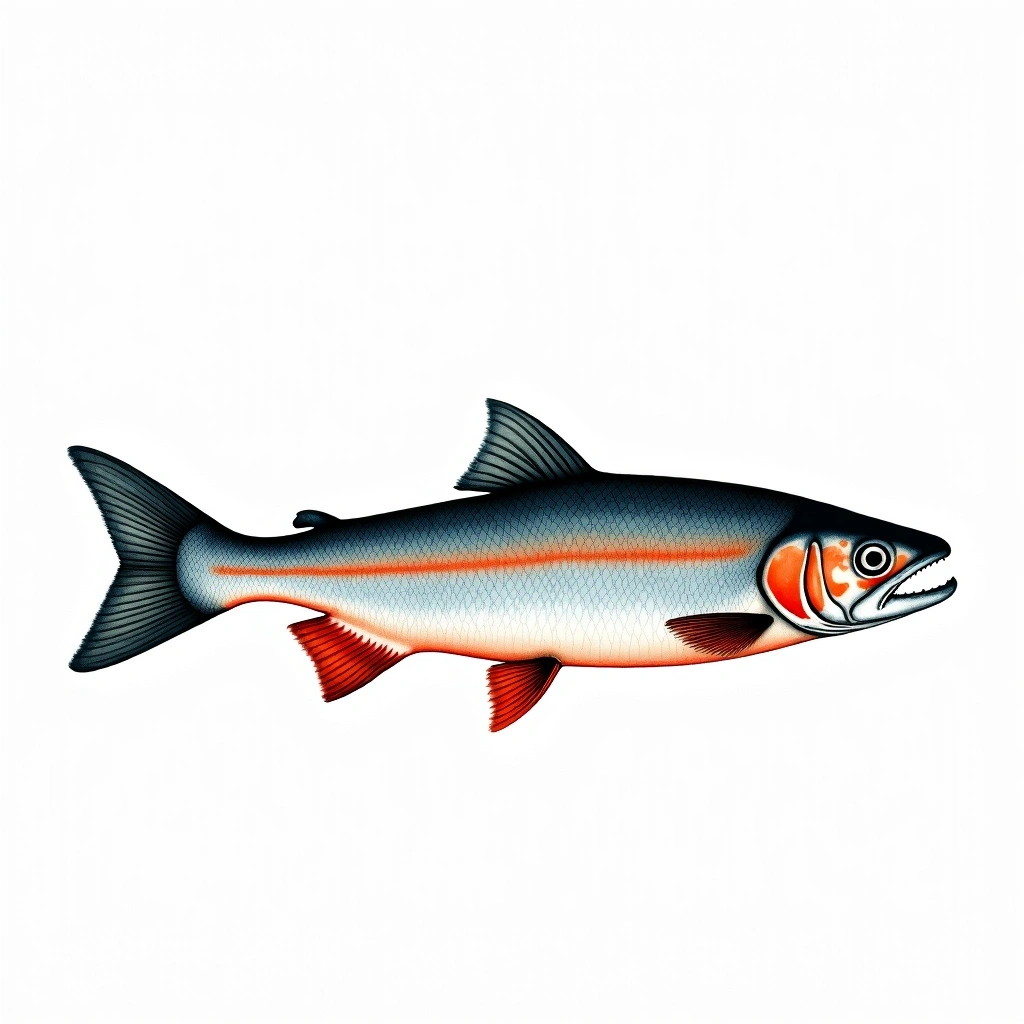
Sockeye Salmon
Oncorhynchus nerka
Embed This Widget
Add the script tag and a data attribute to embed this widget.
<script src="https://cdn.jsdelivr.net/npm/fishfyi-embed@1/dist/embed.min.js" defer></script>
<div data-fishfyi="fish" data-slug="sockeye-salmon"></div>Embed via iframe for maximum compatibility.
<iframe src="https://fishfyi.com/iframe/fish/sockeye-salmon/" width="420" height="400" frameborder="0" style="border:0;border-radius:10px;max-width:100%" loading="lazy"></iframe>Paste this URL in WordPress, Medium, or any oEmbed-compatible platform.
https://fishfyi.com/fish/sockeye-salmon/Add a dynamic SVG badge to your README or docs.
[](https://fishfyi.com/fish/sockeye-salmon/)Use the native HTML custom element.
<script src="https://cdn.jsdelivr.net/npm/fishfyi-embed@1/dist/embed.min.js" defer></script>
<fishfyi-fish slug="sockeye-salmon"></fishfyi-fish>Overview
Famous for turning brilliant crimson on its spawning run, the sockeye salmon shifts from a spotless, metallic blue-green sea fish to a scarlet-bodied, green-headed breeder. Its deep-red flesh is the richest in omega-3 oils of any Pacific salmon, making it the most commercially valuable of the group. Anadromous populations use lake-fed systems such as the Fraser, Skeena, and Kvichak from California to Alaska, Japan, and Kamchatka, while landlocked kokanee forms persist in mountain lakes. Reaching about 84 centimetres, it is excellent grilled, smoked, or canned, its bold flavour standing up to wood smoke. The species is assessed as Least Concern.
On this page
简介
The sockeye salmon is famous for turning bright red during its upstream spawning migration. Its deep-red flesh is the richest in omega-3 fatty acids of all Pacific salmon species, making it the most valuable commercially.
Physical Description
| Measurement | Value |
|---|---|
| Maximum Length | 84.0 cm |
| Maximum Weight | 7.7 kg |
| 栖息水深 | 0-250m |
Coloration
At sea, metallic blue-green back with silvery flanks and no spots; spawning males turn brilliant crimson-red over the entire body with a greenish head; females less vivid with blotchy red-orange hues.
Habitat & Distribution
Anadromous; spawns in rivers and streams throughout the Pacific Coast (Alaska to California, Columbia River). Adults spend 2-3 years in the Pacific Ocean at 50-200m depth before upstream migration.
地理分布
North Pacific from California north to Alaska and west to Japan and Kamchatka. Anadromous populations use lake-fed river systems such as the Fraser, Skeena, and Kvichak rivers; landlocked kokanee forms occur in mountain lakes.
Conservation Status
Sockeye Salmon is classified as Least Concern by the International Union for Conservation of Nature (IUCN).
食用性与烹饪
钓鱼信息
Taxonomy
| 目 | Salmoniformes (Salmon and trout) |
| 科 | Salmonidae (Salmons and trouts) |
| 物种 | Oncorhynchus nerka |
Names in Other Languages
| Language | Name |
|---|---|
| French | Saumon rouge |
| Spanish | Salmón rojo |
常见问题
Can you eat Sockeye Salmon?
How big does Sockeye Salmon get?
Where is Sockeye Salmon found?
Is Sockeye Salmon endangered?
What family does Sockeye Salmon belong to?
Similar Fish
Other species in the Salmonidae family
External Databases
Explore More
Fish Rankings
Discover the largest, heaviest, and most exciting fish species
Nature FYI Family
Explore more wildlife and biodiversity encyclopedias