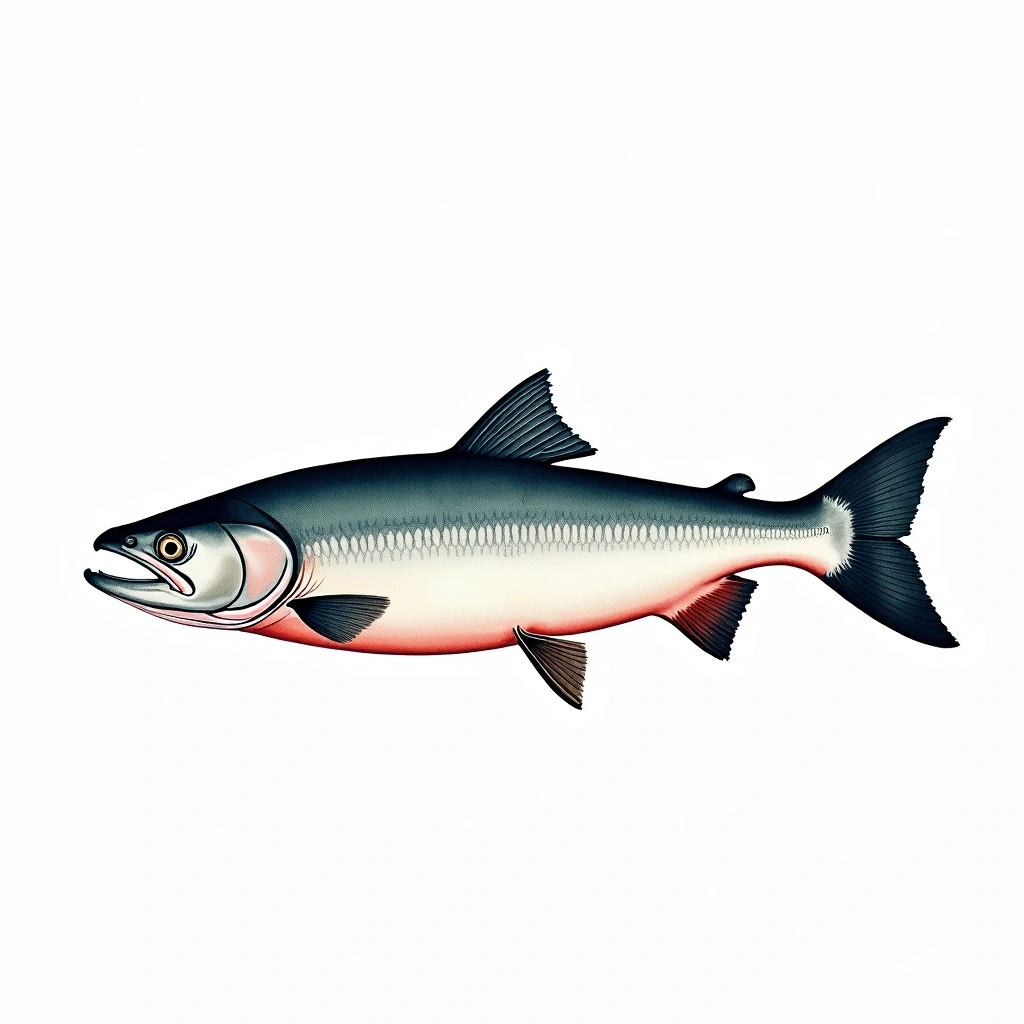
Chinook Salmon
Oncorhynchus tshawytscha
Embed This Widget
Add the script tag and a data attribute to embed this widget.
<script src="https://cdn.jsdelivr.net/npm/fishfyi-embed@1/dist/embed.min.js" defer></script>
<div data-fishfyi="fish" data-slug="chinook-salmon"></div>Embed via iframe for maximum compatibility.
<iframe src="https://fishfyi.com/iframe/fish/chinook-salmon/" width="420" height="400" frameborder="0" style="border:0;border-radius:10px;max-width:100%" loading="lazy"></iframe>Paste this URL in WordPress, Medium, or any oEmbed-compatible platform.
https://fishfyi.com/fish/chinook-salmon/Add a dynamic SVG badge to your README or docs.
[](https://fishfyi.com/fish/chinook-salmon/)Use the native HTML custom element.
<script src="https://cdn.jsdelivr.net/npm/fishfyi-embed@1/dist/embed.min.js" defer></script>
<fishfyi-fish slug="chinook-salmon"></fishfyi-fish>Overview
Largest of the Pacific salmons, the chinook, or king salmon, reaches 1.5 metres and returns from the sea to spawn a single time before dying, its carcass fertilising the whole watershed. Ocean-phase fish are deep blue-green above with silvery flanks and black-spotted backs and tails, turning dark red to olive-brown as they mature upstream. Runs ascend major systems such as the Columbia, Yukon, and Sacramento across the Pacific Rim from California to Kamchatka, Japan, and Korea. Its exceptionally rich, deep orange-red flesh sets the benchmark for Pacific salmon quality, superb grilled, smoked, or cured. The species overall is assessed as Least Concern, though certain runs are severely depleted.
On this page
Hakkında
The chinook salmon, also known as king salmon, is the largest of the Pacific salmon species. It undertakes epic migrations from the ocean to its natal river to spawn once before dying, providing nutrients to the entire watershed ecosystem.
Physical Description
| Measurement | Value |
|---|---|
| Maximum Length | 150,0 cm |
| Maximum Weight | 61,4 kg |
| Derinlik Aralığı | 0-375m |
Coloration
Ocean phase is deep blue-green back with silvery flanks and white belly; irregular black spots on the back, dorsal fin, and both lobes of the tail; spawning adults turn dark red to olive-brown.
Habitat & Distribution
Anadromous; spawns in cold, clear rivers of the Pacific Coast (Alaska to California). Adults spend 1-5 years in the Pacific Ocean before returning to natal streams. Largest Pacific salmon species.
Coğrafi Dağılım
Pacific Rim from California and Oregon north through Alaska and the Aleutian Islands to the Kamchatka Peninsula, Japan, and Korea. Anadromous runs use major river systems like the Columbia, Yukon, and Sacramento rivers.
Ülkeler
Distribution Map
Conservation Status
Chinook Salmon is classified as Least Concern by the International Union for Conservation of Nature (IUCN).
Yenirlik ve Mutfak
Balıkçılık Bilgileri
Taxonomy
| Takım | Salmoniformes (Salmon and trout) |
| Familya | Salmonidae (Salmons and trouts) |
| Türler | Oncorhynchus tshawytscha |
Names in Other Languages
| Language | Name |
|---|---|
| French | Saumon royal |
| Spanish | Salmón real |
Sık Sorulan Sorular
Can you eat Chinook Salmon?
How big does Chinook Salmon get?
Where is Chinook Salmon found?
Is Chinook Salmon endangered?
What family does Chinook Salmon belong to?
Similar Fish
Other species in the Salmonidae family
External Databases
Explore More
Fish Rankings
Discover the largest, heaviest, and most exciting fish species
Nature FYI Family
Explore more wildlife and biodiversity encyclopedias