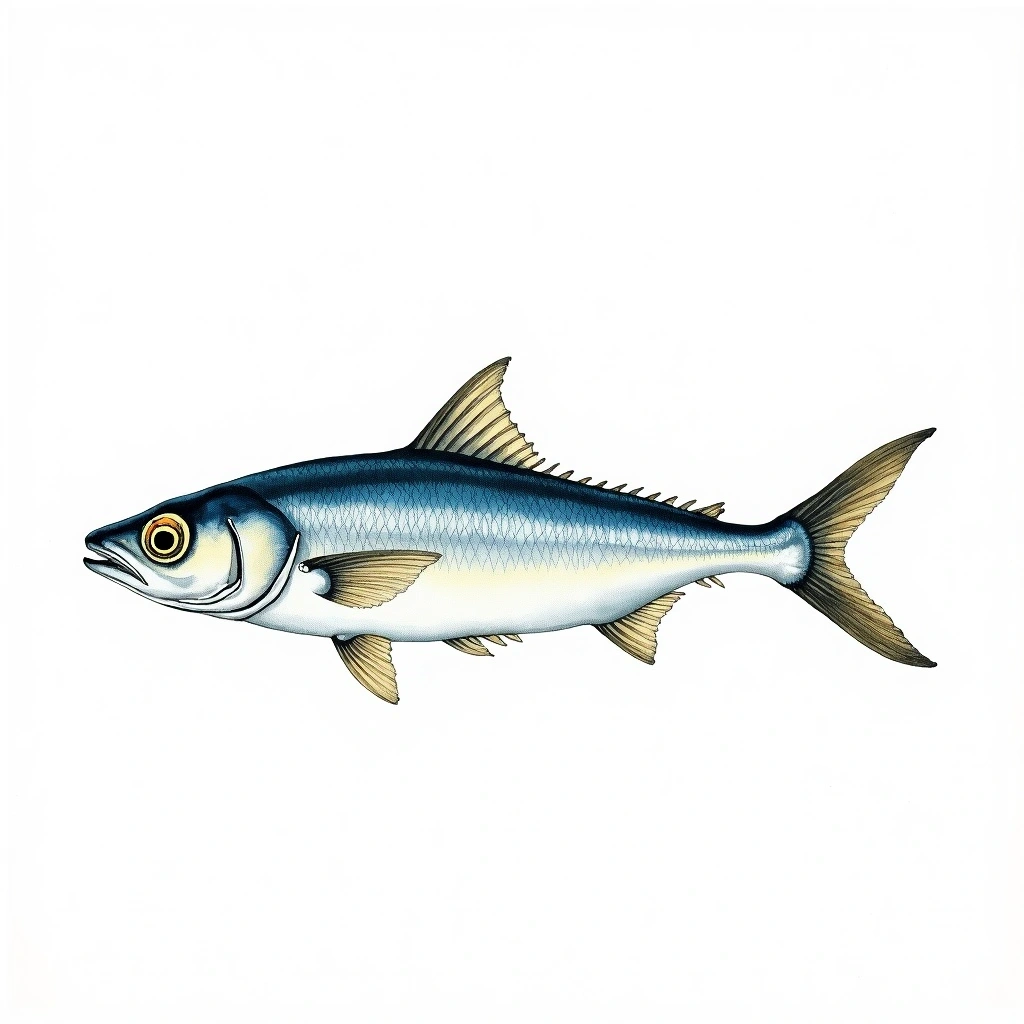
Boquerón
Engraulis encrasicolus
Embed This Widget
Add the script tag and a data attribute to embed this widget.
<script src="https://cdn.jsdelivr.net/npm/fishfyi-embed@1/dist/embed.min.js" defer></script>
<div data-fishfyi="fish" data-slug="european-anchovy"></div>Embed via iframe for maximum compatibility.
<iframe src="https://fishfyi.com/iframe/fish/european-anchovy/" width="420" height="400" frameborder="0" style="border:0;border-radius:10px;max-width:100%" loading="lazy"></iframe>Paste this URL in WordPress, Medium, or any oEmbed-compatible platform.
https://fishfyi.com/fish/european-anchovy/Add a dynamic SVG badge to your README or docs.
[](https://fishfyi.com/fish/european-anchovy/)Use the native HTML custom element.
<script src="https://cdn.jsdelivr.net/npm/fishfyi-embed@1/dist/embed.min.js" defer></script>
<fishfyi-fish slug="european-anchovy"></fishfyi-fish>Overview
Fermented into the garum of ancient Rome and still central to Mediterranean cooking, Engraulis encrasicolus is a small schooling fish of outsized ecological and culinary importance. A metallic blue-green back gives way to a bright silver-blue lateral stripe and a silvery-white belly on a slender, large-scaled body reaching 20 cm. Large pelagic shoals range through the Mediterranean, the Black Sea and the eastern Atlantic from the British Isles to South Africa, with principal spawning grounds in the Adriatic, the Bay of Biscay and the Sea of Azov. The oily, intensely savoury flesh is rich in omega-3 fatty acids and salt-cures to a deep umami used in pasta, pizza and anchovy paste. The IUCN Red List assesses the species as Least Concern.
On this page
Acerca de
The European anchovy is a small, schooling fish that plays a vital role in marine food webs. Packed with omega-3 fatty acids, it is a culinary staple from pizza toppings to Caesar salad dressing to the fermented fish sauce garum of ancient Rome.
Physical Description
| Measurement | Value |
|---|---|
| Maximum Length | 20,0 cm |
| Maximum Weight | 0,05 kg |
| Rango de Profundidad | 0-400m |
Coloration
Blue-green metallic back with a distinctive bright silver-blue lateral stripe along the mid-flank; belly silvery-white; slender body with large thin scales; fins are clear and colorless.
Habitat & Distribution
Neritic, estuaries
Distribución Geográfica
Mediterranean Sea, Black Sea, and eastern Atlantic from the British Isles south to South Africa. Forms large pelagic shoals on continental shelf waters; key spawning grounds in the Adriatic, Bay of Biscay, and Azov Sea.
Países
Distribution Map
Conservation Status
Boquerón is classified as Least Concern by the International Union for Conservation of Nature (IUCN).
Comestibilidad y Gastronomía
Taxonomy
| Orden | Clupeiformes (Herrings & Sardines) |
| Familia | Engraulidae (Anchovies) |
| Especies | Engraulis encrasicolus |
Names in Other Languages
| Language | Name |
|---|---|
| French | Anchois |
| Spanish | Boquerón |
Preguntas Frecuentes
Can you eat Boquerón?
How big does Boquerón get?
Where is Boquerón found?
Is Boquerón endangered?
What family does Boquerón belong to?
Similar Fish
Other species in the Engraulidae family
External Databases
Explore More
Fish Rankings
Discover the largest, heaviest, and most exciting fish species
Nature FYI Family
Explore more wildlife and biodiversity encyclopedias