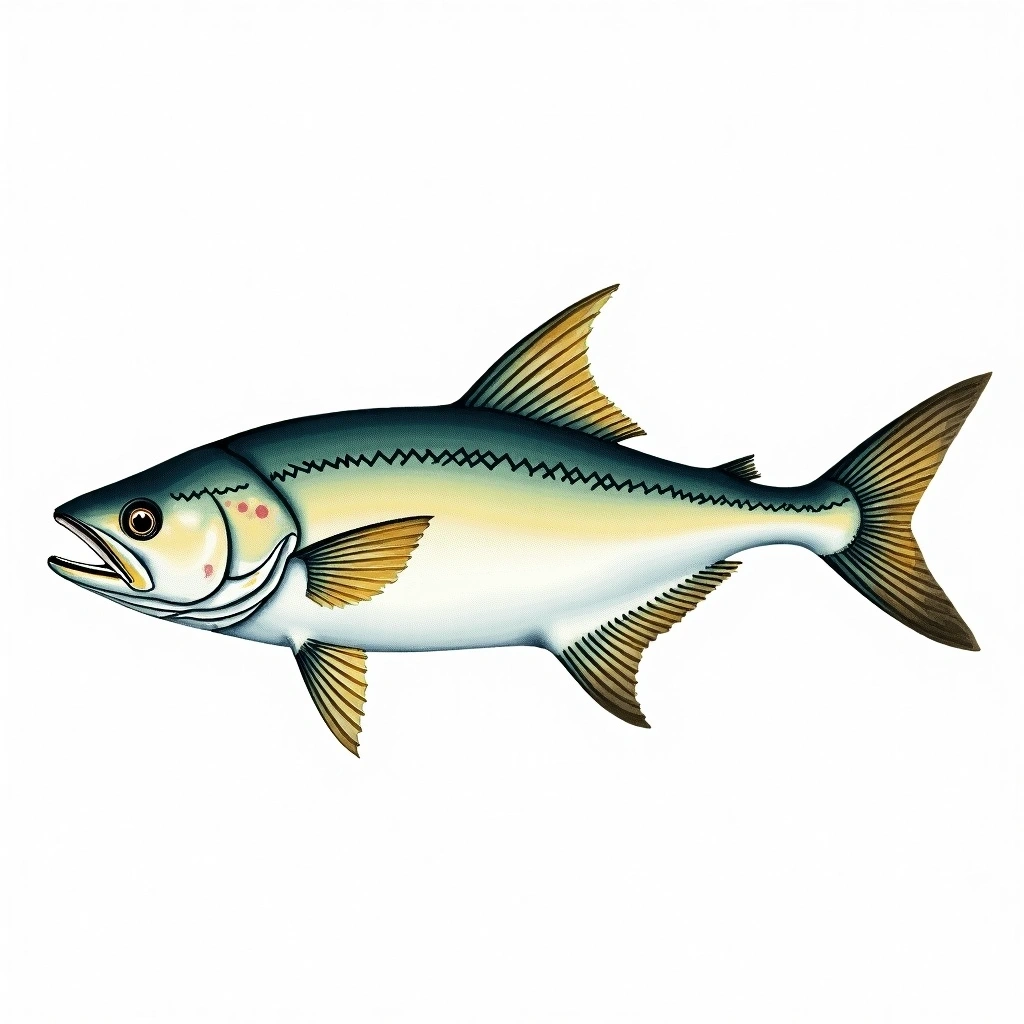
Tarpon
Megalops atlanticus
Embed This Widget
Add the script tag and a data attribute to embed this widget.
<script src="https://cdn.jsdelivr.net/npm/fishfyi-embed@1/dist/embed.min.js" defer></script>
<div data-fishfyi="fish" data-slug="tarpon"></div>Embed via iframe for maximum compatibility.
<iframe src="https://fishfyi.com/iframe/fish/tarpon/" width="420" height="400" frameborder="0" style="border:0;border-radius:10px;max-width:100%" loading="lazy"></iframe>Paste this URL in WordPress, Medium, or any oEmbed-compatible platform.
https://fishfyi.com/fish/tarpon/Add a dynamic SVG badge to your README or docs.
[](https://fishfyi.com/fish/tarpon/)Use the native HTML custom element.
<script src="https://cdn.jsdelivr.net/npm/fishfyi-embed@1/dist/embed.min.js" defer></script>
<fishfyi-fish slug="tarpon"></fishfyi-fish>Overview
Nicknamed the Silver King for its large, mirror-like scales and towering leaps, the tarpon is an ancient fish whose lineage stretches back more than 100 million years. It can breathe air through a modified, lung-like swim bladder, letting it survive oxygen-poor estuaries, lagoons, and even fresh water. Reaching 2.5 metres and 161 kilograms, it ranges through the western and eastern Atlantic from Virginia to Brazil and West Africa. Its acrobatic fights make it one of the most coveted saltwater sport fish, though its bony flesh is rarely eaten and it is caught almost entirely for release. Assessed as Vulnerable, it is protected in parts of its range.
On this page
Sobre
The tarpon is often called the 'Silver King' for its large mirror-like scales and acrobatic leaps. This ancient species has existed for over 100 million years and can breathe air using a modified swim bladder.
Physical Description
| Measurement | Value |
|---|---|
| Maximum Length | 250,0 cm |
| Maximum Weight | 161,0 kg |
| Faixa de Profundidade | 0-40m |
Coloration
Brilliant chrome-silver flanks with large, plate-like reflective scales producing a mirror-like sheen; back is dark blue-green; fins clear to dusky with elongated dorsal ray.
Habitat & Distribution
Coral reefs, estuaries
Distribuição Geográfica
Western and eastern Atlantic from Virginia south through the Caribbean Sea, Gulf of Mexico, and along the South American coast to Brazil; also West Africa. Enters estuaries, lagoons, and freshwater rivers.
Países
Distribution Map
Conservation Status
Tarpon is classified as Vulnerable by the International Union for Conservation of Nature (IUCN).
Tarpon faces significant threats to its wild populations.
Comestibilidade e Culinária
Informações de Pesca
Temporadas de Pesca
Taxonomy
| Ordem | Elopiformes |
| Família | Megalopidae (Tarpons) |
| Espécies | Megalops atlanticus |
Names in Other Languages
| Language | Name |
|---|---|
| French | Tarpon argenté |
| Spanish | Tarpón |
Perguntas Frequentes
Can you eat Tarpon?
How big does Tarpon get?
Where is Tarpon found?
Is Tarpon endangered?
What family does Tarpon belong to?
Similar Fish
Other species in the Megalopidae family
External Databases
Explore More
Fish Rankings
Discover the largest, heaviest, and most exciting fish species
Nature FYI Family
Explore more wildlife and biodiversity encyclopedias