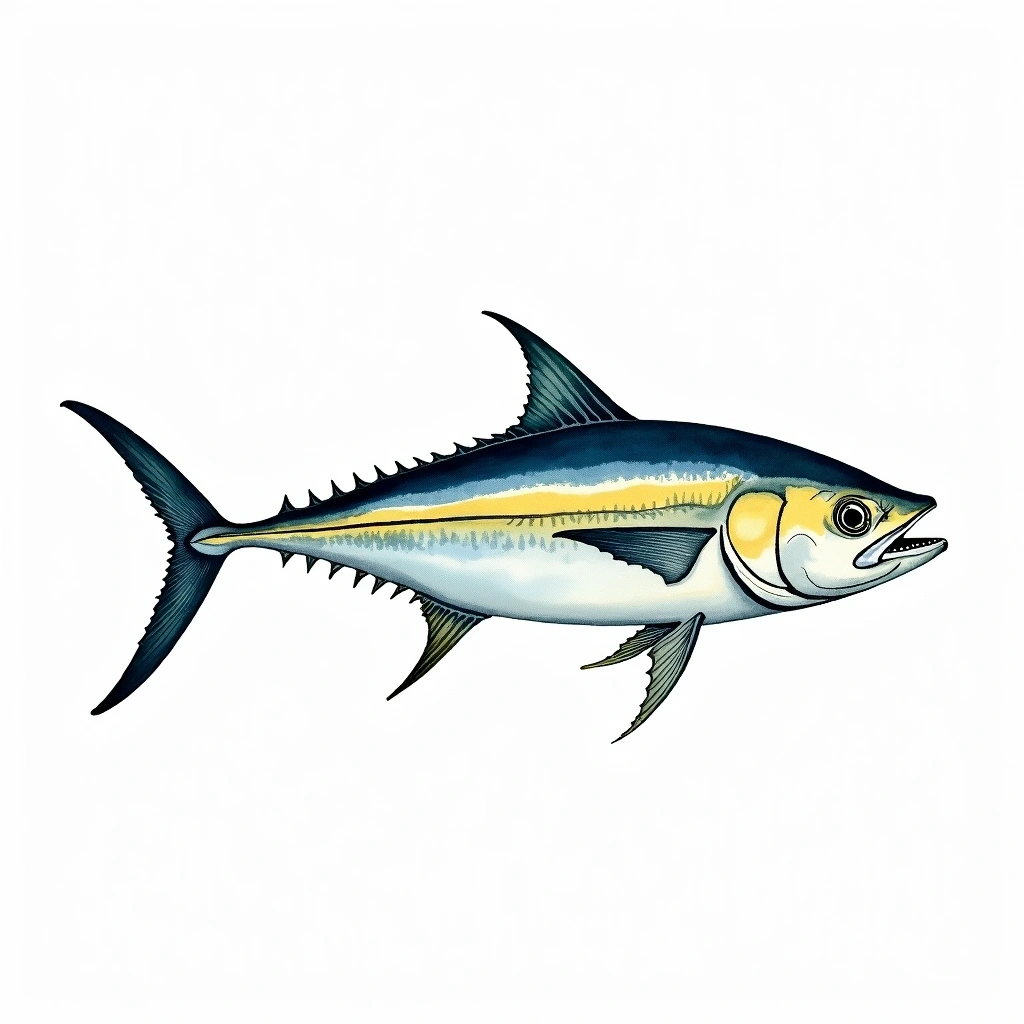
Rabil
Thunnus albacares
Embed This Widget
Add the script tag and a data attribute to embed this widget.
<script src="https://cdn.jsdelivr.net/npm/fishfyi-embed@1/dist/embed.min.js" defer></script>
<div data-fishfyi="fish" data-slug="yellowfin-tuna"></div>Embed via iframe for maximum compatibility.
<iframe src="https://fishfyi.com/iframe/fish/yellowfin-tuna/" width="420" height="400" frameborder="0" style="border:0;border-radius:10px;max-width:100%" loading="lazy"></iframe>Paste this URL in WordPress, Medium, or any oEmbed-compatible platform.
https://fishfyi.com/fish/yellowfin-tuna/Add a dynamic SVG badge to your README or docs.
[](https://fishfyi.com/fish/yellowfin-tuna/)Use the native HTML custom element.
<script src="https://cdn.jsdelivr.net/npm/fishfyi-embed@1/dist/embed.min.js" defer></script>
<fishfyi-fish slug="yellowfin-tuna"></fishfyi-fish>Overview
A sleek pelagic hunter of tropical and subtropical seas, the yellowfin tuna is named for the bright canary-yellow finlets and lateral band that stripe its metallic blue-black body. Capable of speeds beyond 75 kilometres per hour, it ranges pantropically across the Atlantic, Indian, and Pacific, gathering around seamounts, fish-aggregating devices, and thermocline boundaries. It reaches nearly 2.4 metres and 200 kilograms and is prized both as a hard-fighting game fish and for sashimi-grade meat. Lean and dense with a clean, meaty flavour, its flesh is served seared, grilled as steaks, or raw in poke. One of the most commercially valuable tunas, the species is assessed as Least Concern.
On this page
Acerca de
El rabil es un depredador pelágico presente en océanos tropicales y subtropicales de todo el mundo. Capaz de superar los 75 km/h, es apreciado tanto como pez deportivo como por su carne de calidad sashimi.
Physical Description
| Measurement | Value |
|---|---|
| Maximum Length | 239,0 cm |
| Maximum Weight | 200,0 kg |
| Rango de Profundidad | 1-1602m |
Coloration
Dorso azul-negro metálico oscuro que contrasta con un vientre blanco plateado; una franja lateral amarillo dorado recorre la mitad del cuerpo; la aleta dorsal, la anal y las pínnulas son de un amarillo canario brillante con bordes negros.
Habitat & Distribution
Pelágico, estuarios
Distribución Geográfica
Pantropical, distribuido por el Atlántico, el Índico y el Pacífico entre aproximadamente 40°N y 35°S. Se agrupa en torno a montes submarinos, dispositivos concentradores de peces y los límites de la termoclina en zonas pelágicas de mar abierto.
Países
Distribution Map
Conservation Status
Rabil is classified as Least Concern by the International Union for Conservation of Nature (IUCN).
Comestibilidad y Gastronomía
Información de Pesca
Temporadas de Pesca
Taxonomy
| Orden | Scombriformes (Mackerels and tunas) |
| Familia | Scombridae (Mackerels and tunas) |
| Especies | Thunnus albacares |
Names in Other Languages
| Language | Name |
|---|---|
| French | Albacore |
| Spanish | Rabil |
Preguntas Frecuentes
Can you eat Rabil?
How big does Rabil get?
Where is Rabil found?
Is Rabil endangered?
What family does Rabil belong to?
Similar Fish
Other species in the Scombridae family
External Databases
Explore More
Fish Rankings
Discover the largest, heaviest, and most exciting fish species
Nature FYI Family
Explore more wildlife and biodiversity encyclopedias