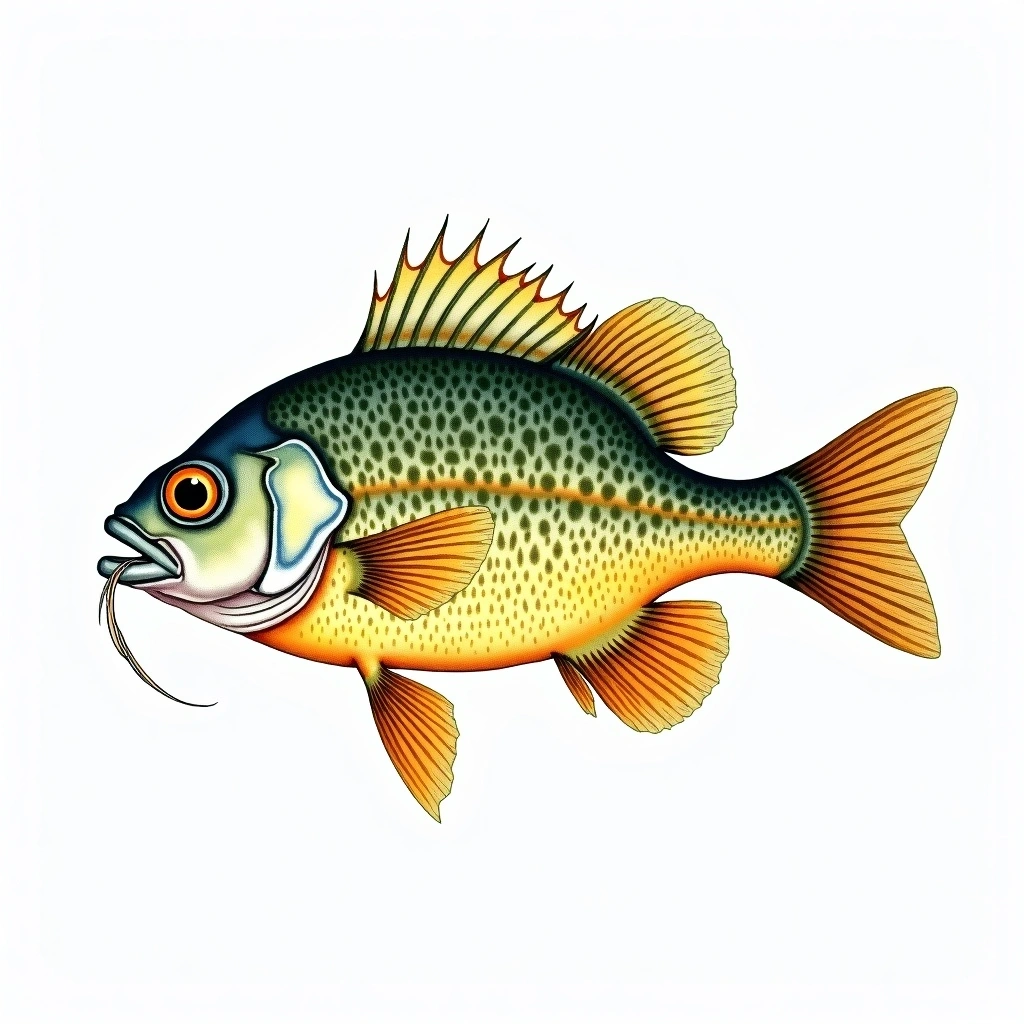
Mojarra oreja azul
Lepomis macrochirus
Embed This Widget
Add the script tag and a data attribute to embed this widget.
<script src="https://cdn.jsdelivr.net/npm/fishfyi-embed@1/dist/embed.min.js" defer></script>
<div data-fishfyi="fish" data-slug="bluegill"></div>Embed via iframe for maximum compatibility.
<iframe src="https://fishfyi.com/iframe/fish/bluegill/" width="420" height="400" frameborder="0" style="border:0;border-radius:10px;max-width:100%" loading="lazy"></iframe>Paste this URL in WordPress, Medium, or any oEmbed-compatible platform.
https://fishfyi.com/fish/bluegill/Add a dynamic SVG badge to your README or docs.
[](https://fishfyi.com/fish/bluegill/)Use the native HTML custom element.
<script src="https://cdn.jsdelivr.net/npm/fishfyi-embed@1/dist/embed.min.js" defer></script>
<fishfyi-fish slug="bluegill"></fishfyi-fish>Overview
Often the first fish an angler ever catches, the bluegill is the most common sunfish across eastern and central North America. Its deep, laterally compressed body carries six to eight dark vertical bars, a black opercular ear flap, and a breast ranging from yellow to bright orange. Native from the Great Lakes to the Gulf Coast and Florida, it inhabits weedy lake margins, ponds, and slow river pools and has been stocked far beyond its original range. Despite reaching only about 41 centimetres, it is a voracious predator of insects and a spirited fighter on light tackle. Its mild, sweet, fine-textured flesh makes it one of America's favourite panfish, and the species is assessed as Least Concern.
On this page
Acerca de
La mojarra oreja azul es el pez sol más común de Norteamérica y a menudo el primer pez que captura un joven pescador. Su cuerpo alto, su opérculo oscuro y sus colores azul-verde iridiscentes la hacen fácil de identificar. Es un feroz depredador de insectos a pesar de su pequeño tamaño.
Physical Description
| Measurement | Value |
|---|---|
| Maximum Length | 41,0 cm |
| Maximum Weight | 2,2 kg |
Coloration
Dorso verde oliva a verde azulado oscuro con 6 a 8 barras verticales más oscuras; opérculo iridiscente de un azul-púrpura intenso; el pecho y el vientre van del amarillo al naranja brillante; sin manchas en la aleta dorsal blanda.
Habitat & Distribution
Estuarios
Distribución Geográfica
Nativa del este y centro de Estados Unidos, desde la cuenca de los Grandes Lagos hacia el sur hasta la costa del Golfo y Florida. Habita márgenes de lago con maleza, estanques y remansos de ríos lentos; ampliamente introducida en el oeste de Norteamérica.
Conservation Status
Mojarra oreja azul is classified as Least Concern by the International Union for Conservation of Nature (IUCN).
Comestibilidad y Gastronomía
Información de Pesca
Taxonomy
| Orden | Centrarchiformes (Sunfishes) |
| Familia | Centrarchidae (Sunfishes) |
| Especies | Lepomis macrochirus |
Names in Other Languages
| Language | Name |
|---|---|
| French | Crapet arlequin |
| Spanish | Mojarra oreja azul |
Preguntas Frecuentes
Can you eat Mojarra oreja azul?
How big does Mojarra oreja azul get?
Where is Mojarra oreja azul found?
Is Mojarra oreja azul endangered?
What family does Mojarra oreja azul belong to?
Similar Fish
Other species in the Centrarchidae family
External Databases
Explore More
Fish Rankings
Discover the largest, heaviest, and most exciting fish species
Nature FYI Family
Explore more wildlife and biodiversity encyclopedias