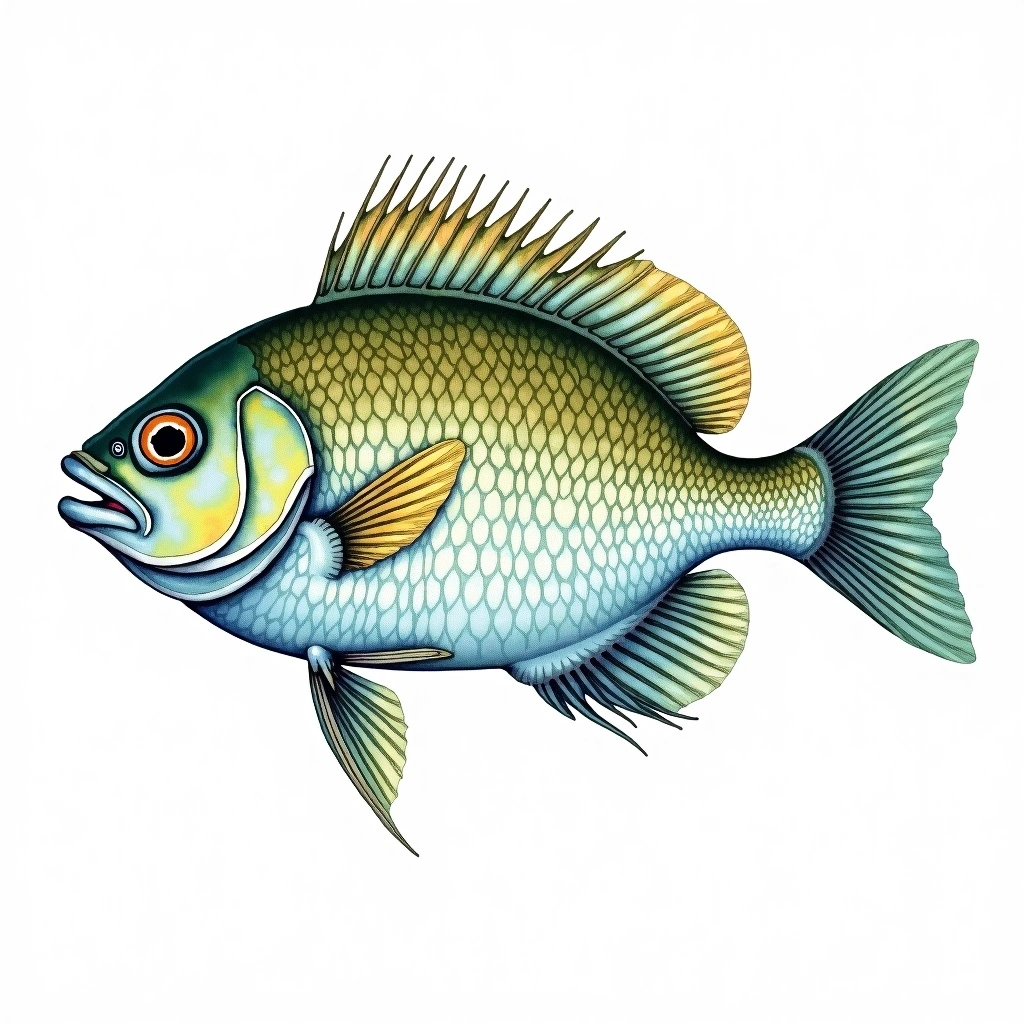
Giant Gourami
Osphronemus goramy
Embed This Widget
Add the script tag and a data attribute to embed this widget.
<script src="https://cdn.jsdelivr.net/npm/fishfyi-embed@1/dist/embed.min.js" defer></script>
<div data-fishfyi="fish" data-slug="giant-gourami"></div>Embed via iframe for maximum compatibility.
<iframe src="https://fishfyi.com/iframe/fish/giant-gourami/" width="420" height="400" frameborder="0" style="border:0;border-radius:10px;max-width:100%" loading="lazy"></iframe>Paste this URL in WordPress, Medium, or any oEmbed-compatible platform.
https://fishfyi.com/fish/giant-gourami/Add a dynamic SVG badge to your README or docs.
[](https://fishfyi.com/fish/giant-gourami/)Use the native HTML custom element.
<script src="https://cdn.jsdelivr.net/npm/fishfyi-embed@1/dist/embed.min.js" defer></script>
<fishfyi-fish slug="giant-gourami"></fishfyi-fish>Overview
Despite reaching 70 cm and 9 kg, Osphronemus goramy feeds chiefly on aquatic plants. The labyrinth organ shared by its family allows it to breathe air directly, suiting the warm, slow rivers, ponds and swamps of Sumatra, Java, Borneo and mainland Southeast Asia where it is native; it also tolerates slightly brackish water in lowland estuarine reaches. Juveniles are yellow-olive with dark bands, maturing to greyish-silver with a convex forehead. Firm white flesh of mild flavour has made it a major food fish across Southeast Asia, deep-fried, grilled with spices or steamed. Its docile temperament also sustains a trade in large aquarium specimens. The IUCN Red List assesses the species as Least Concern.
On this page
نبذة
The giant gourami is a large labyrinth fish native to Southeast Asia. Despite its size, it is primarily herbivorous, feeding on aquatic plants. A popular food fish in Indonesia, it is also kept as a pet due to its docile personality.
Physical Description
| Measurement | Value |
|---|---|
| Maximum Length | 70,0 cm |
| Maximum Weight | 9,0 kg |
| نطاق العمق | 10-?m |
Coloration
Juveniles are yellow-olive with dark bands and a yellow-spotted pattern; adults become grayish-silver to pale yellowish-white with a convex forehead profile; dorsal and anal fins are long and dusky gray.
Habitat & Distribution
Native to Indonesia and Southeast Asia; introduced throughout tropical Asia. Inhabits warm, slow-moving rivers, ponds, and swamps (24-30°C). Can breathe air using a labyrinth organ. Popular food fish in Asia.
النطاق الجغرافي
Native to large rivers, lakes, and swamps of Sumatra, Java, Borneo, and mainland Southeast Asia. Introduced across tropical Asia for food; tolerates slightly brackish water in lowland estuarine areas near river mouths.
Conservation Status
Giant Gourami is classified as Least Concern by the International Union for Conservation of Nature (IUCN).
الصلاحية للأكل والطهي
رعاية الحوض
Check aquarium compatibility for Giant Gourami with other fish species.
Compatibility CheckerTaxonomy
| الرتبة | Anabantiformes (Labyrinth fishes) |
| الفصيلة | Osphronemidae (Gouramis) |
| الأنواع | Osphronemus goramy |
Names in Other Languages
| Language | Name |
|---|---|
| French | Gourami géant |
| Spanish | Gurami gigante |
الأسئلة الشائعة
Can you eat Giant Gourami?
How big does Giant Gourami get?
Is Giant Gourami good for aquariums?
Where is Giant Gourami found?
Is Giant Gourami endangered?
What family does Giant Gourami belong to?
Similar Fish
Other species in the Osphronemidae family
External Databases
Explore More
Fish Rankings
Discover the largest, heaviest, and most exciting fish species
Nature FYI Family
Explore more wildlife and biodiversity encyclopedias