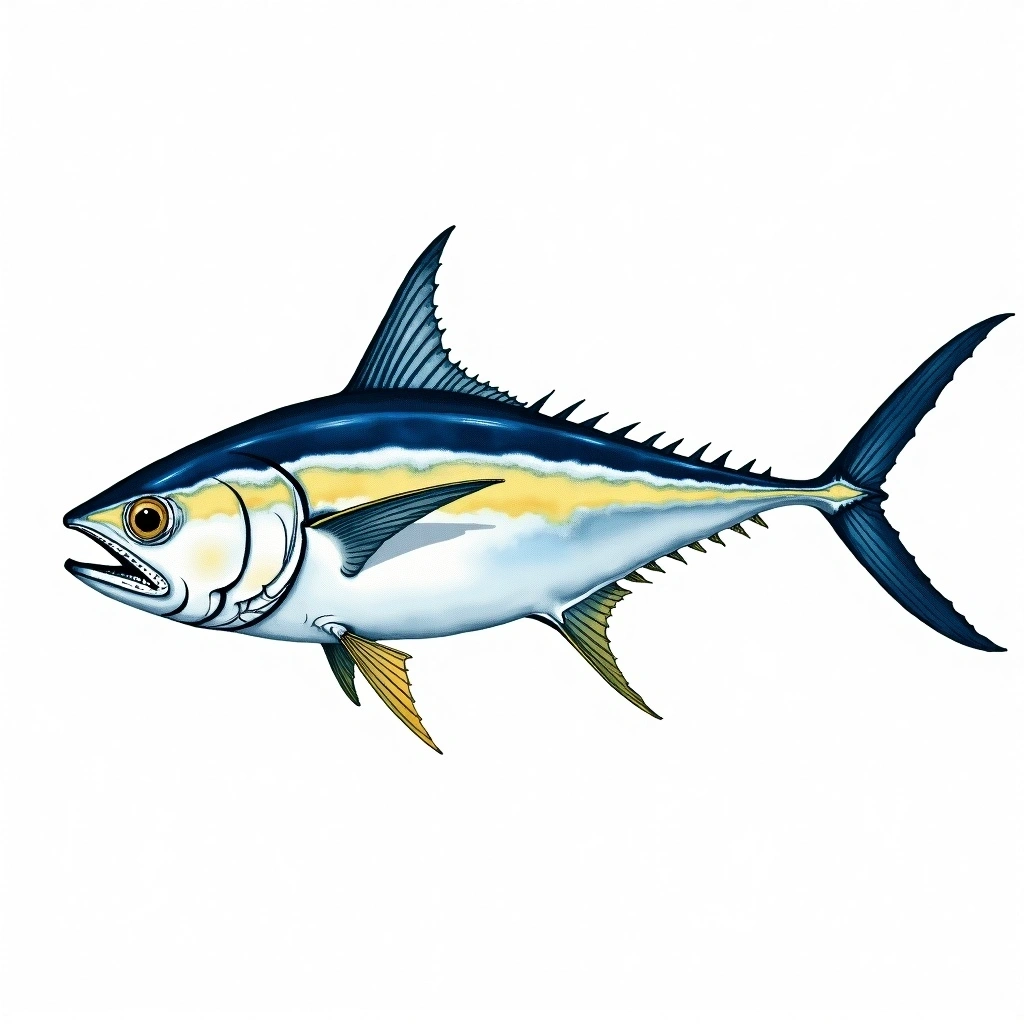
Atlantic Bluefin Tuna
Thunnus thynnus
Embed This Widget
Add the script tag and a data attribute to embed this widget.
<script src="https://cdn.jsdelivr.net/npm/fishfyi-embed@1/dist/embed.min.js" defer></script>
<div data-fishfyi="fish" data-slug="atlantic-bluefin-tuna"></div>Embed via iframe for maximum compatibility.
<iframe src="https://fishfyi.com/iframe/fish/atlantic-bluefin-tuna/" width="420" height="400" frameborder="0" style="border:0;border-radius:10px;max-width:100%" loading="lazy"></iframe>Paste this URL in WordPress, Medium, or any oEmbed-compatible platform.
https://fishfyi.com/fish/atlantic-bluefin-tuna/Add a dynamic SVG badge to your README or docs.
[](https://fishfyi.com/fish/atlantic-bluefin-tuna/)Use the native HTML custom element.
<script src="https://cdn.jsdelivr.net/npm/fishfyi-embed@1/dist/embed.min.js" defer></script>
<fishfyi-fish slug="atlantic-bluefin-tuna"></fishfyi-fish>Overview
Among the largest of all bony fishes, the Atlantic bluefin tuna reaches 4.5 metres and exceeds 680 kilograms, driving its metallic blue-black body across the open Atlantic, Mediterranean, and Black seas. It is regionally endothermic, holding its core temperature above the surrounding water to sustain high-speed pursuit of herring and mackerel, and can cross the Atlantic in under sixty days. Two spawning populations exist, one in the Gulf of Mexico and one in the Mediterranean. Its deeply marbled, fatty belly meat, prized as o-toro, commands the highest prices in Japanese sushi markets, where single fish have sold for millions. A pinnacle sport catch known for punishing runs, it is currently assessed as Least Concern despite intense fishing pressure.
On this page
Giới thiệu
The Atlantic bluefin tuna is one of the largest bony fish, capable of crossing the Atlantic in under 60 days. A single specimen has sold for over $3 million at Tokyo's fish market. It can maintain a body temperature above the surrounding water.
Physical Description
| Measurement | Value |
|---|---|
| Maximum Length | 458,0 cm |
| Maximum Weight | 680,0 kg |
| Phạm vi độ sâu | 0-985m |
Coloration
Dark metallic blue-black back with a bright silvery-white lower belly; upper flanks show iridescent blue and green tones; short yellow finlets have black margins; second dorsal and pectoral fins dark.
Habitat & Distribution
Open ocean in the Atlantic, Mediterranean, and Black Sea. Highly migratory, ranging from temperate to subtropical surface waters (0-100m, optimum 15-25°C). Aggregates seasonally to feed on herring and mackerel.
Phân bố địa lý
North Atlantic Ocean from the Gulf of Mexico and Caribbean north to Norway and Iceland, including the Mediterranean and Black seas. Two spawning populations: western Atlantic (Gulf of Mexico) and eastern Atlantic (Mediterranean).
Quốc gia
Distribution Map
Conservation Status
Atlantic Bluefin Tuna is classified as Least Concern by the International Union for Conservation of Nature (IUCN).
Tính ăn được và ẩm thực
Thông tin câu cá
Taxonomy
| Bộ | Scombriformes (Mackerels and tunas) |
| Họ | Scombridae (Mackerels and tunas) |
| Loài | Thunnus thynnus |
Names in Other Languages
| Language | Name |
|---|---|
| French | Thon rouge de l'Atlantique |
| Spanish | Atún rojo del Atlántico |
Câu hỏi thường gặp
Can you eat Atlantic Bluefin Tuna?
How big does Atlantic Bluefin Tuna get?
Where is Atlantic Bluefin Tuna found?
Is Atlantic Bluefin Tuna endangered?
What family does Atlantic Bluefin Tuna belong to?
Similar Fish
Other species in the Scombridae family
External Databases
Explore More
Fish Rankings
Discover the largest, heaviest, and most exciting fish species
Nature FYI Family
Explore more wildlife and biodiversity encyclopedias