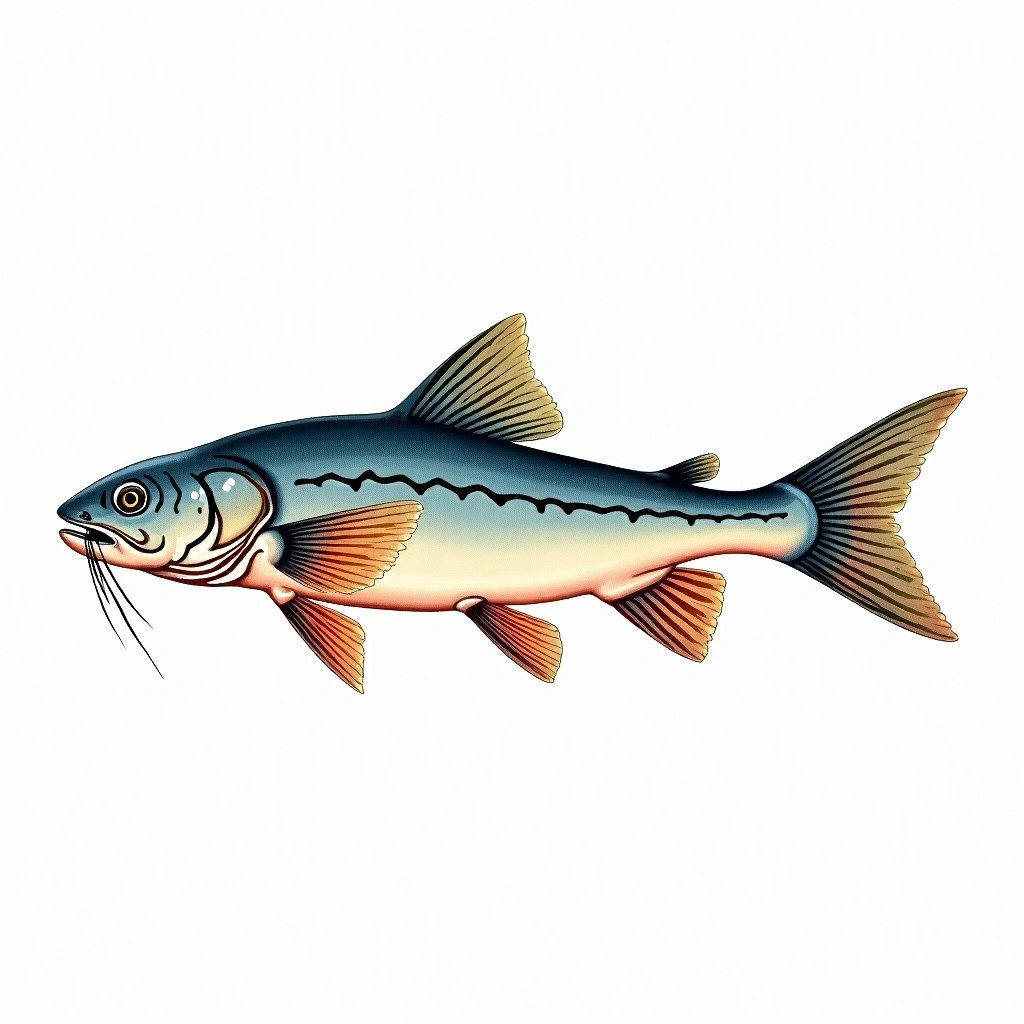
Wels Catfish
Silurus glanis
Embed This Widget
Add the script tag and a data attribute to embed this widget.
<script src="https://cdn.jsdelivr.net/npm/fishfyi-embed@1/dist/embed.min.js" defer></script>
<div data-fishfyi="fish" data-slug="wels-catfish"></div>Embed via iframe for maximum compatibility.
<iframe src="https://fishfyi.com/iframe/fish/wels-catfish/" width="420" height="400" frameborder="0" style="border:0;border-radius:10px;max-width:100%" loading="lazy"></iframe>Paste this URL in WordPress, Medium, or any oEmbed-compatible platform.
https://fishfyi.com/fish/wels-catfish/Add a dynamic SVG badge to your README or docs.
[](https://fishfyi.com/fish/wels-catfish/)Use the native HTML custom element.
<script src="https://cdn.jsdelivr.net/npm/fishfyi-embed@1/dist/embed.min.js" defer></script>
<fishfyi-fish slug="wels-catfish"></fishfyi-fish>Overview
The largest freshwater fish in Europe, the wels catfish can exceed five metres and 300 kilograms in the great rivers and lakes of the continent. Dark olive-green with mottled marbling and a broad, flat head, its smooth, scaleless body glides through deep, slow water where it hunts largely by night. Native from the Rhine east to the Caspian and Aral drainages and introduced across western Europe, it occasionally enters brackish river mouths. It can live over 80 years and has been filmed lunging onto shorelines to seize bathing pigeons. Its soft, fatty, mildly sweet flesh is popular in Central European cooking, and the species is assessed as Least Concern.
On this page
О рыбе
The wels catfish is the largest freshwater fish in Europe, capable of exceeding 5 meters. Found in large rivers and lakes across the continent, it has been documented beaching itself to catch pigeons. It can live over 80 years.
Physical Description
| Measurement | Value |
|---|---|
| Maximum Length | 500,0 cm |
| Maximum Weight | 300,0 kg |
| Диапазон глубин | 0-30m |
Coloration
Dark olive-green to slate-gray back with irregular mottled marbling of darker blotches; flanks grade to olive-yellow; scaleless smooth skin; belly pale cream to yellowish-white; head broad and flat.
Habitat & Distribution
Large rivers, lakes, and reservoirs across Europe and Asia (Volga, Danube, Rhine, Ob). Inhabits deep, slow-moving freshwater with soft substrates. Tolerates turbid water (15-25°C). Highly nocturnal.
Ареал обитания
Native to large river systems and lakes of central and eastern Europe from the Rhine basin east to the Caspian and Aral sea drainages. Introduced to western Europe; occasionally enters brackish river mouths and coastal lagoons.
Страны
Distribution Map
Conservation Status
Wels Catfish is classified as Least Concern by the International Union for Conservation of Nature (IUCN).
Съедобность и кулинария
Информация о рыболовстве
Taxonomy
| Отряд | Siluriformes (Catfishes) |
| Семейство | Siluridae (Sheatfish) |
| Виды | Silurus glanis |
Names in Other Languages
| Language | Name |
|---|---|
| French | Silure glane |
| Spanish | Siluro |
Часто задаваемые вопросы
Can you eat Wels Catfish?
How big does Wels Catfish get?
Where is Wels Catfish found?
Is Wels Catfish endangered?
What family does Wels Catfish belong to?
Similar Fish
Other species in the Siluridae family
External Databases
Explore More
Fish Rankings
Discover the largest, heaviest, and most exciting fish species
Nature FYI Family
Explore more wildlife and biodiversity encyclopedias