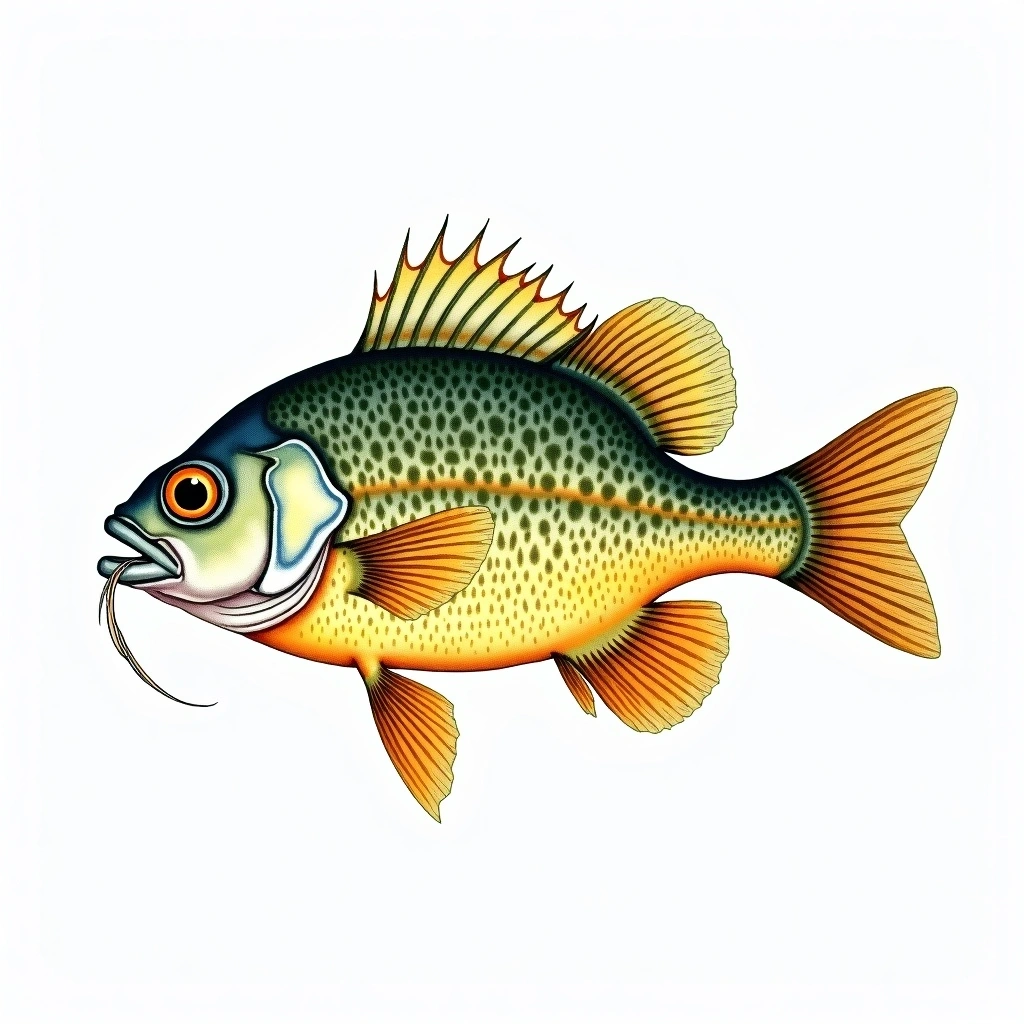
Bluegill
Lepomis macrochirus
Embed This Widget
Add the script tag and a data attribute to embed this widget.
<script src="https://cdn.jsdelivr.net/npm/fishfyi-embed@1/dist/embed.min.js" defer></script>
<div data-fishfyi="fish" data-slug="bluegill"></div>Embed via iframe for maximum compatibility.
<iframe src="https://fishfyi.com/iframe/fish/bluegill/" width="420" height="400" frameborder="0" style="border:0;border-radius:10px;max-width:100%" loading="lazy"></iframe>Paste this URL in WordPress, Medium, or any oEmbed-compatible platform.
https://fishfyi.com/fish/bluegill/Add a dynamic SVG badge to your README or docs.
[](https://fishfyi.com/fish/bluegill/)Use the native HTML custom element.
<script src="https://cdn.jsdelivr.net/npm/fishfyi-embed@1/dist/embed.min.js" defer></script>
<fishfyi-fish slug="bluegill"></fishfyi-fish>Overview
Often the first fish an angler ever catches, the bluegill is the most common sunfish across eastern and central North America. Its deep, laterally compressed body carries six to eight dark vertical bars, a black opercular ear flap, and a breast ranging from yellow to bright orange. Native from the Great Lakes to the Gulf Coast and Florida, it inhabits weedy lake margins, ponds, and slow river pools and has been stocked far beyond its original range. Despite reaching only about 41 centimetres, it is a voracious predator of insects and a spirited fighter on light tackle. Its mild, sweet, fine-textured flesh makes it one of America's favourite panfish, and the species is assessed as Least Concern.
On this page
О рыбе
The bluegill is the most common sunfish in North America and often the first fish a young angler catches. Its deep body, dark ear flap, and iridescent blue-green colors make it easy to identify. A fierce predator of insects despite its small size.
Physical Description
| Measurement | Value |
|---|---|
| Maximum Length | 41,0 cm |
| Maximum Weight | 2,2 kg |
Coloration
Olive-green to dark bluish-green back with 6–8 darker vertical bars; deep blue-purple iridescent opercular flap; breast and belly range from yellow to bright orange; no spots on the soft dorsal fin.
Habitat & Distribution
Estuaries
Ареал обитания
Native to the eastern and central United States from the Great Lakes basin south to the Gulf Coast and Florida. Inhabits weedy lake margins, ponds, and slow river pools; introduced extensively across western North America.
Conservation Status
Bluegill is classified as Least Concern by the International Union for Conservation of Nature (IUCN).
Съедобность и кулинария
Информация о рыболовстве
Taxonomy
| Отряд | Centrarchiformes (Sunfishes) |
| Семейство | Centrarchidae (Sunfishes) |
| Виды | Lepomis macrochirus |
Names in Other Languages
| Language | Name |
|---|---|
| French | Crapet arlequin |
| Spanish | Mojarra oreja azul |
Часто задаваемые вопросы
Can you eat Bluegill?
How big does Bluegill get?
Where is Bluegill found?
Is Bluegill endangered?
What family does Bluegill belong to?
Similar Fish
Other species in the Centrarchidae family
External Databases
Explore More
Fish Rankings
Discover the largest, heaviest, and most exciting fish species
Nature FYI Family
Explore more wildlife and biodiversity encyclopedias