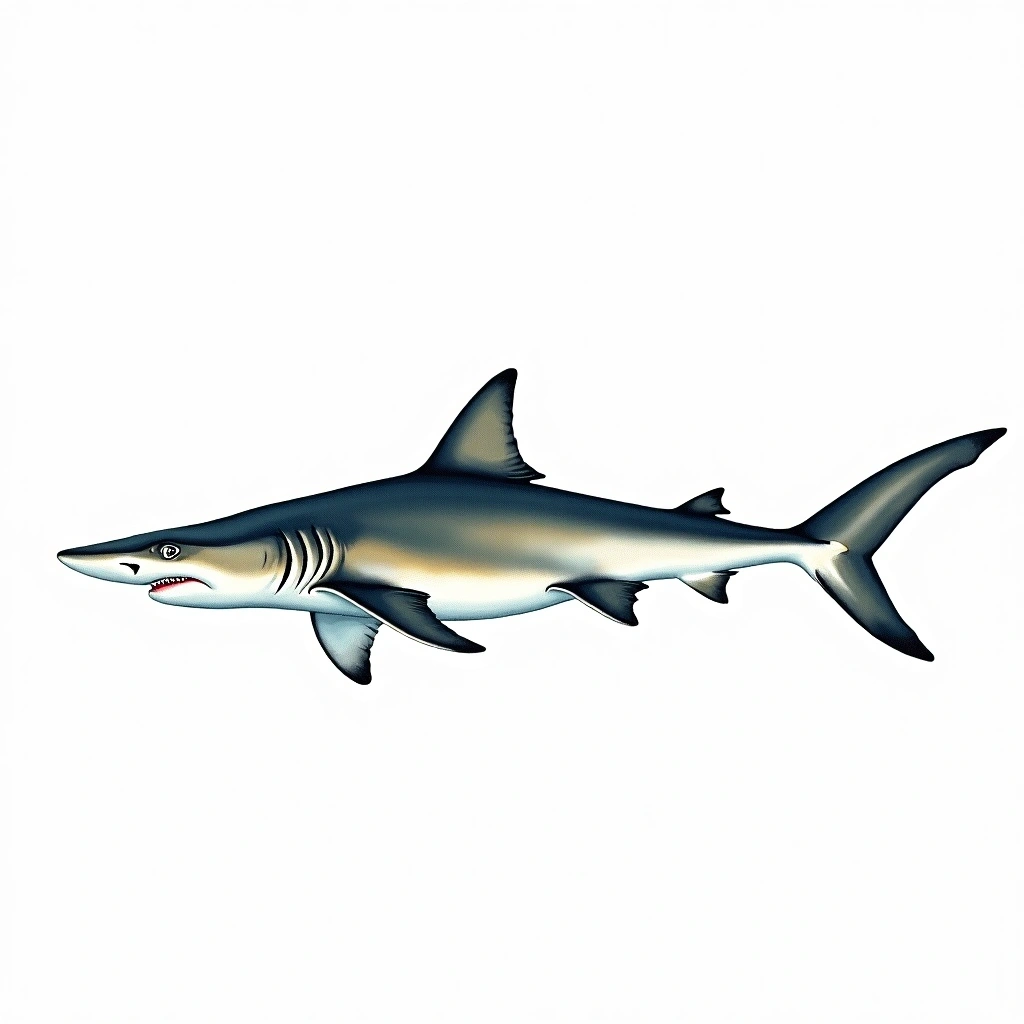
Great Hammerhead Shark
Sphyrna mokarran
Embed This Widget
Add the script tag and a data attribute to embed this widget.
<script src="https://cdn.jsdelivr.net/npm/fishfyi-embed@1/dist/embed.min.js" defer></script>
<div data-fishfyi="fish" data-slug="great-hammerhead-shark"></div>Embed via iframe for maximum compatibility.
<iframe src="https://fishfyi.com/iframe/fish/great-hammerhead-shark/" width="420" height="400" frameborder="0" style="border:0;border-radius:10px;max-width:100%" loading="lazy"></iframe>Paste this URL in WordPress, Medium, or any oEmbed-compatible platform.
https://fishfyi.com/fish/great-hammerhead-shark/Add a dynamic SVG badge to your README or docs.
[](https://fishfyi.com/fish/great-hammerhead-shark/)Use the native HTML custom element.
<script src="https://cdn.jsdelivr.net/npm/fishfyi-embed@1/dist/embed.min.js" defer></script>
<fishfyi-fish slug="great-hammerhead-shark"></fishfyi-fish>Overview
The largest of the nine hammerhead species, the great hammerhead is a warm-water shark reaching over six metres and marked by a tall, strongly curved first dorsal fin. Its broad, hammer-shaped cephalofoil is packed with electroreceptors that let it sweep the seabed and detect stingrays buried in sand, a favourite prey. Circumtropical in coastal and offshore waters of the Atlantic, Indian, and Pacific, it concentrates around reefs, shelf edges, and deep drop-offs. Severe bycatch and the fin trade have driven a steep population decline, and the species is now Critically Endangered, so its consumption is strongly discouraged. It is a live-bearer producing large litters.
On this page
Sobre
The great hammerhead is the largest of the nine hammerhead shark species. Its distinctive cephalofoil (hammer-shaped head) houses an array of electroreceptors that allow it to detect stingrays buried beneath the sand.
Physical Description
| Measurement | Value |
|---|---|
| Maximum Length | 610,0 cm |
| Maximum Weight | 580,0 kg |
| Faixa de Profundidade | 1-300m |
Coloration
Brownish-gray to olive-gray dorsal surface with a clean countershaded white belly; no distinct patterning; first dorsal fin is tall and strongly falcate; pelvic fin tips dusky.
Habitat & Distribution
Neritic
Distribuição Geográfica
Circumtropical in warm coastal and offshore waters of the Atlantic, Indian, and Pacific oceans. Concentrates around coral reefs, continental shelf edges, and deep-water drop-offs; population critically depleted by bycatch.
Conservation Status
Great Hammerhead Shark is classified as Critically Endangered by the International Union for Conservation of Nature (IUCN).
Great Hammerhead Shark faces significant threats to its wild populations.
Comestibilidade e Culinária
Taxonomy
| Ordem | Carcharhiniformes (Ground sharks) |
| Família | Sphyrnidae (Hammerhead sharks) |
| Espécies | Sphyrna mokarran |
Names in Other Languages
| Language | Name |
|---|---|
| French | Grand requin marteau |
| Spanish | Cornuda gigante |
Perguntas Frequentes
Can you eat Great Hammerhead Shark?
How big does Great Hammerhead Shark get?
Where is Great Hammerhead Shark found?
Is Great Hammerhead Shark endangered?
What family does Great Hammerhead Shark belong to?
Similar Fish
Other species in the Sphyrnidae family
External Databases
Explore More
Fish Rankings
Discover the largest, heaviest, and most exciting fish species
Nature FYI Family
Explore more wildlife and biodiversity encyclopedias