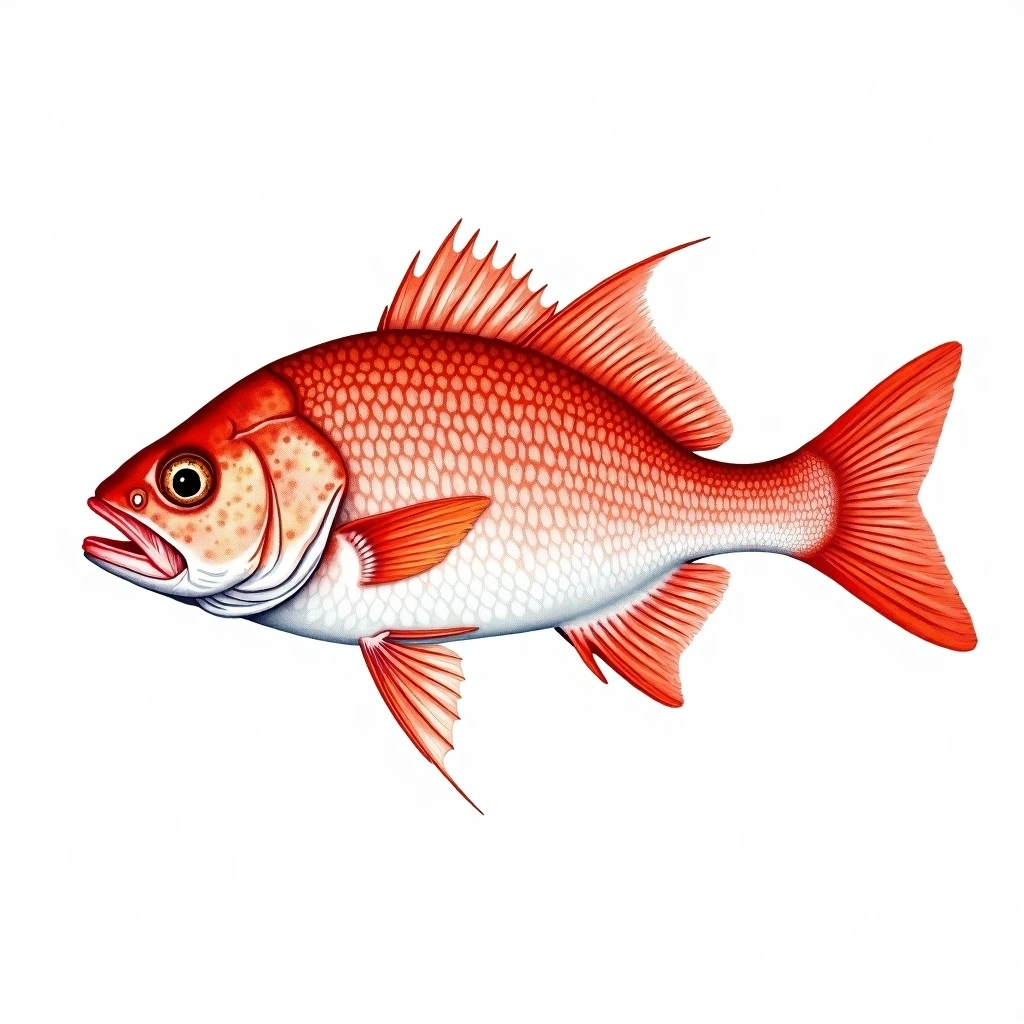
Vivaneau campèche
Lutjanus campechanus
Embed This Widget
Add the script tag and a data attribute to embed this widget.
<script src="https://cdn.jsdelivr.net/npm/fishfyi-embed@1/dist/embed.min.js" defer></script>
<div data-fishfyi="fish" data-slug="red-snapper"></div>Embed via iframe for maximum compatibility.
<iframe src="https://fishfyi.com/iframe/fish/red-snapper/" width="420" height="400" frameborder="0" style="border:0;border-radius:10px;max-width:100%" loading="lazy"></iframe>Paste this URL in WordPress, Medium, or any oEmbed-compatible platform.
https://fishfyi.com/fish/red-snapper/Add a dynamic SVG badge to your README or docs.
[](https://fishfyi.com/fish/red-snapper/)Use the native HTML custom element.
<script src="https://cdn.jsdelivr.net/npm/fishfyi-embed@1/dist/embed.min.js" defer></script>
<fishfyi-fish slug="red-snapper"></fishfyi-fish>Overview
One of the most commercially valuable reef fishes of the Gulf of Mexico, the red snapper is a rosy-red, sharp-finned species of rocky reefs and artificial structures. It ranges through the western North Atlantic from North Carolina to the Yucatan at depths of 10 to 190 metres, gathering over hard-bottom habitat. Reaching about a metre and 23 kilograms, juveniles often bear a dark spot beneath the front of the dorsal fin. Its moist, sweet, nutty white flesh anchors Gulf Coast and Caribbean cooking, prized for whole roasting, pan-searing, and ceviche. Heavy fishing pressure has left the species assessed as Vulnerable, and its harvest is tightly managed.
On this page
À propos
The red snapper is one of the most commercially valuable reef fish in the Gulf of Mexico. With its distinctive rose-red body and pointed anal fin, it inhabits rocky reefs and artificial structures at depths of 10-190 meters.
Physical Description
| Measurement | Value |
|---|---|
| Maximum Length | 100,0 cm |
| Maximum Weight | 22,8 kg |
| Plage de profondeur | 10-190m |
Coloration
Uniform rosy-red to brick-red over the entire body and fins; belly slightly paler pink-red; juveniles may show a dark spot at the lateral line below the anterior dorsal fin.
Habitat & Distribution
Neritic, coral reefs
Aire de répartition
Western North Atlantic from North Carolina to Yucatan, concentrated in the Gulf of Mexico and Caribbean. Associates with rocky reefs, artificial structures, and hard-bottom habitat at depths of 10–190 m.
Distribution Map
Conservation Status
Vivaneau campèche is classified as Vulnerable by the International Union for Conservation of Nature (IUCN).
Vivaneau campèche faces significant threats to its wild populations.
Comestibilité et gastronomie
Informations sur la pêche
Saisons de pêche
Taxonomy
| Ordre | Perciformes (Perch-like fishes) |
| Famille | Lutjanidae (Snappers) |
| Espèces | Lutjanus campechanus |
Names in Other Languages
| Language | Name |
|---|---|
| French | Vivaneau campèche |
| Spanish | Pargo del Golfo |
Foire aux questions
Can you eat Vivaneau campèche?
How big does Vivaneau campèche get?
Where is Vivaneau campèche found?
Is Vivaneau campèche endangered?
What family does Vivaneau campèche belong to?
Similar Fish
Other species in the Lutjanidae family
External Databases
Explore More
Fish Rankings
Discover the largest, heaviest, and most exciting fish species
Nature FYI Family
Explore more wildlife and biodiversity encyclopedias