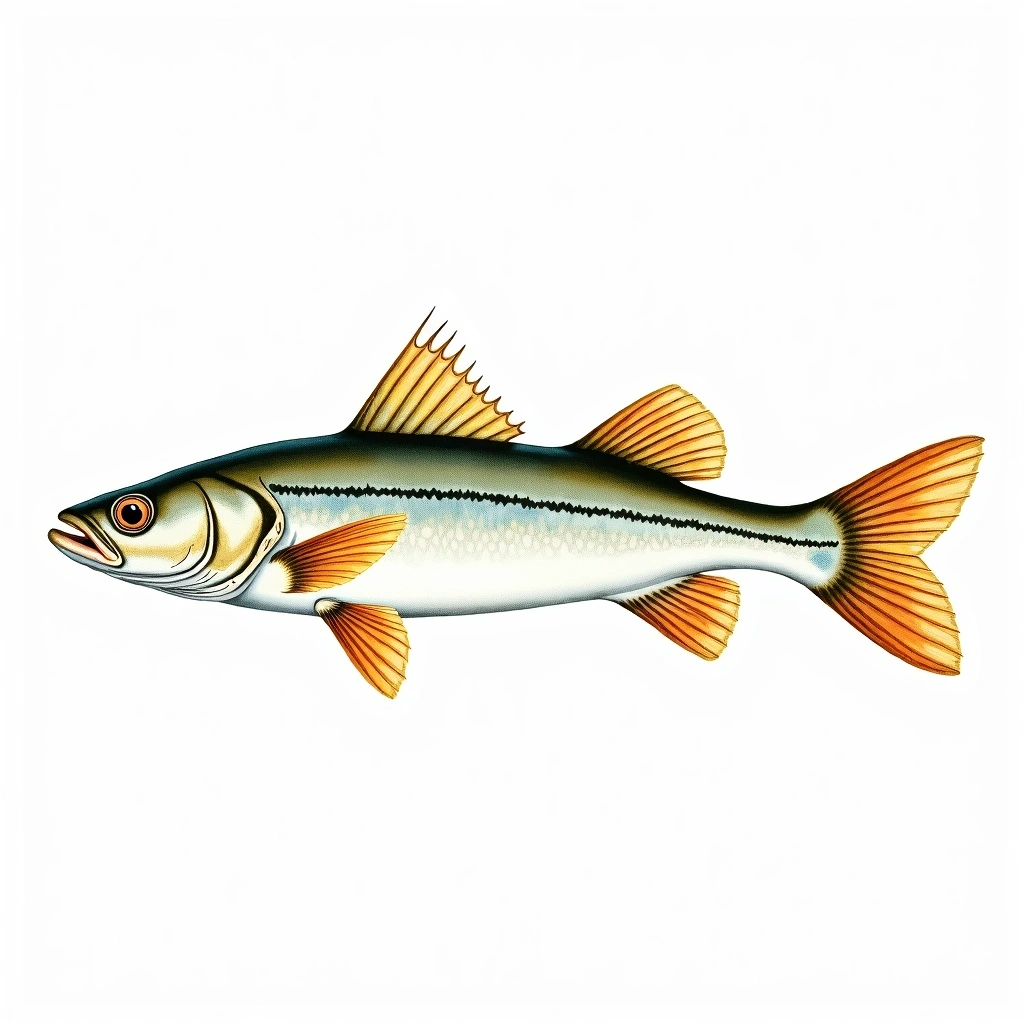
Crossie blanc
Centropomus undecimalis
Embed This Widget
Add the script tag and a data attribute to embed this widget.
<script src="https://cdn.jsdelivr.net/npm/fishfyi-embed@1/dist/embed.min.js" defer></script>
<div data-fishfyi="fish" data-slug="common-snook"></div>Embed via iframe for maximum compatibility.
<iframe src="https://fishfyi.com/iframe/fish/common-snook/" width="420" height="400" frameborder="0" style="border:0;border-radius:10px;max-width:100%" loading="lazy"></iframe>Paste this URL in WordPress, Medium, or any oEmbed-compatible platform.
https://fishfyi.com/fish/common-snook/Add a dynamic SVG badge to your README or docs.
[](https://fishfyi.com/fish/common-snook/)Use the native HTML custom element.
<script src="https://cdn.jsdelivr.net/npm/fishfyi-embed@1/dist/embed.min.js" defer></script>
<fishfyi-fish slug="common-snook"></fishfyi-fish>Overview
A prized inshore game fish of the tropical western Atlantic, the common snook is marked by a bold black lateral line running from gill cover to tail. Pale golden-olive with silvery flanks, it grows to 1.4 metres and ranges from South Carolina through the Gulf of Mexico and Caribbean to Brazil, frequenting mangrove estuaries, tidal creeks, and freshwater rivers. Highly intolerant of cold, it cannot survive water below about 12 degrees Celsius, so severe winter chills can trigger local die-offs. Its sweet, firm, large-flaked white flesh is esteemed in Florida and the Caribbean, taken grilled, blackened, or pan-seared. Carefully regulated with seasonal closures, the species is assessed as Least Concern and is targeted on live pilchards and topwater plugs.
On this page
À propos
The common snook is a prized inshore game fish found in tropical western Atlantic waters. It is highly sensitive to cold water and cannot survive temperatures below 12 degrees Celsius. Its lateral line is distinctive — a bold black stripe.
Physical Description
| Measurement | Value |
|---|---|
| Maximum Length | 140,0 cm |
| Maximum Weight | 24,3 kg |
| Plage de profondeur | ?-22m |
Coloration
Pale golden-olive to grayish-brown back with silvery flanks; a bold black lateral stripe runs from the operculum to the tail; belly pale yellow-white; fins are yellowish with a dusky posterior dorsal fin.
Habitat & Distribution
Neritic, estuaries
Aire de répartition
Western Atlantic from South Carolina south through the Gulf of Mexico, entire Caribbean, and along the Atlantic and Pacific coasts of Central America to Brazil. Frequents mangrove estuaries, tidal creeks, and freshwater rivers.
Conservation Status
Crossie blanc is classified as Least Concern by the International Union for Conservation of Nature (IUCN).
Comestibilité et gastronomie
Informations sur la pêche
Taxonomy
| Ordre | Carangaria/misc |
| Famille | Centropomidae |
| Espèces | Centropomus undecimalis |
Names in Other Languages
| Language | Name |
|---|---|
| French | Crossie blanc |
| Spanish | Róbalo blanco |
Foire aux questions
Can you eat Crossie blanc?
How big does Crossie blanc get?
Where is Crossie blanc found?
Is Crossie blanc endangered?
What family does Crossie blanc belong to?
Similar Fish
Other species in the Centropomidae family
External Databases
Explore More
Fish Rankings
Discover the largest, heaviest, and most exciting fish species
Nature FYI Family
Explore more wildlife and biodiversity encyclopedias