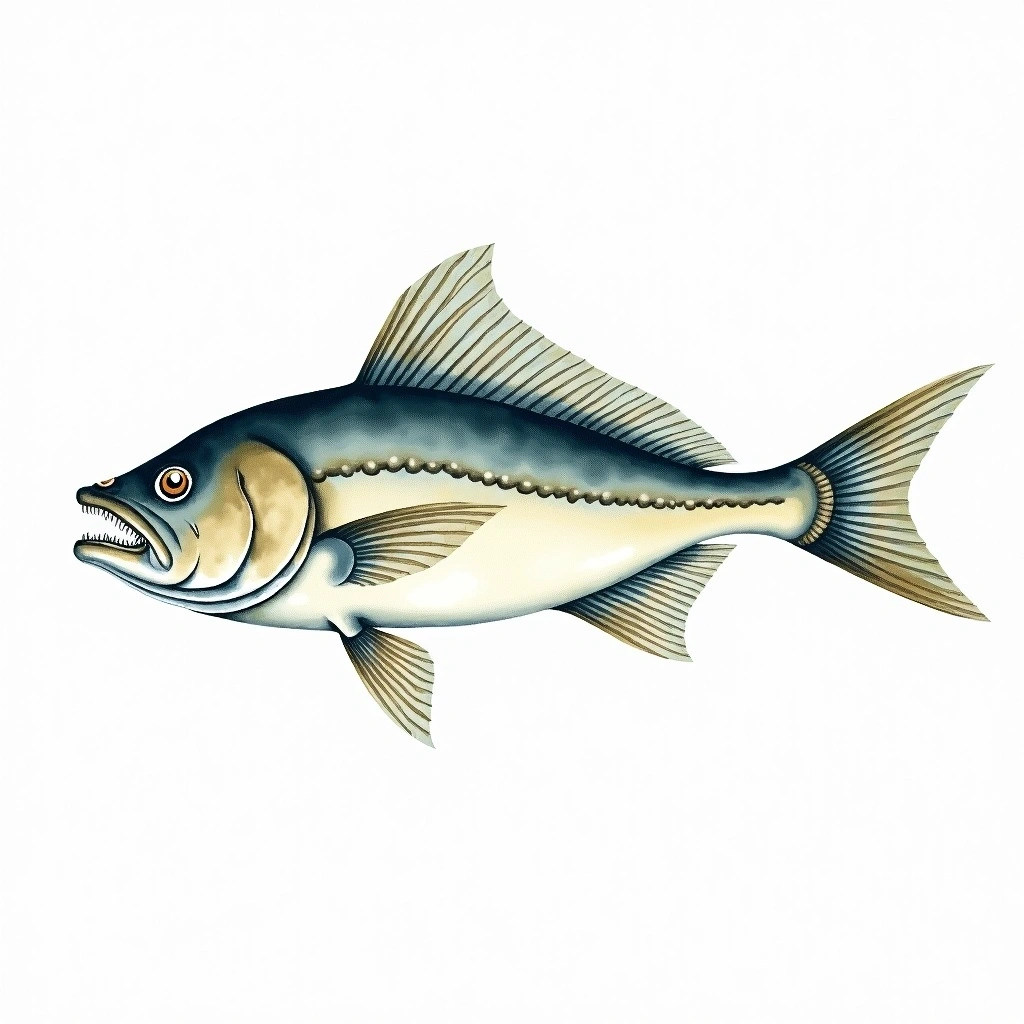
Flétan de l'Atlantique
Hippoglossus hippoglossus
Embed This Widget
Add the script tag and a data attribute to embed this widget.
<script src="https://cdn.jsdelivr.net/npm/fishfyi-embed@1/dist/embed.min.js" defer></script>
<div data-fishfyi="fish" data-slug="atlantic-halibut"></div>Embed via iframe for maximum compatibility.
<iframe src="https://fishfyi.com/iframe/fish/atlantic-halibut/" width="420" height="400" frameborder="0" style="border:0;border-radius:10px;max-width:100%" loading="lazy"></iframe>Paste this URL in WordPress, Medium, or any oEmbed-compatible platform.
https://fishfyi.com/fish/atlantic-halibut/Add a dynamic SVG badge to your README or docs.
[](https://fishfyi.com/fish/atlantic-halibut/)Use the native HTML custom element.
<script src="https://cdn.jsdelivr.net/npm/fishfyi-embed@1/dist/embed.min.js" defer></script>
<fishfyi-fish slug="atlantic-halibut"></fishfyi-fish>Overview
The largest flatfish in the world, the Atlantic halibut can exceed three metres and 320 kilograms on the sandy and gravel bottoms of the North Atlantic. Like other right-eyed flounders, it begins life symmetrical before one eye migrates so that both sit on the olive-brown, camouflaged upper side, while the blind underside is pure white. Slow-growing and long-lived, it ranges from Labrador and Greenland to Iceland, Norway, and the British Isles at depths between 50 and 2,000 metres. Its firm, sweet, very lean flesh is highly valued, yet decades of commercial overfishing have left the species Endangered, making sustainable sourcing essential. Recovery is slow because individuals mature late and reproduce over many years.
On this page
À propos
The Atlantic halibut is the largest flatfish in the world, capable of exceeding 300 kg. Both eyes are on the right side of its body. It is a slow-growing, long-lived species that has suffered severe overfishing.
Physical Description
| Measurement | Value |
|---|---|
| Maximum Length | 470,0 cm |
| Maximum Weight | 320,0 kg |
| Plage de profondeur | 50-2000m |
Coloration
Eyed side is olive-brown to dark greenish-brown with mottled paler blotches providing camouflage; blind underside is pure white; lateral line distinctly arched over the pectoral fin.
Habitat & Distribution
Neritic
Aire de répartition
North Atlantic from Labrador and Greenland east to Iceland, Norway, the Barents Sea, and the British Isles. Found on sandy and gravel bottoms at depths of 50–2,000 m; severely depleted by commercial overfishing.
Pays
Distribution Map
Conservation Status
Flétan de l'Atlantique is classified as Endangered by the International Union for Conservation of Nature (IUCN).
Flétan de l'Atlantique faces significant threats to its wild populations.
Comestibilité et gastronomie
Informations sur la pêche
Taxonomy
| Ordre | Pleuronectiformes (Flatfishes) |
| Famille | Pleuronectidae (Righteye flounders) |
| Espèces | Hippoglossus hippoglossus |
Names in Other Languages
| Language | Name |
|---|---|
| French | Flétan de l'Atlantique |
| Spanish | Fletán del Atlántico |
Foire aux questions
Can you eat Flétan de l'Atlantique?
How big does Flétan de l'Atlantique get?
Where is Flétan de l'Atlantique found?
Is Flétan de l'Atlantique endangered?
What family does Flétan de l'Atlantique belong to?
Similar Fish
Other species in the Pleuronectidae family
External Databases
Explore More
Fish Rankings
Discover the largest, heaviest, and most exciting fish species
Nature FYI Family
Explore more wildlife and biodiversity encyclopedias