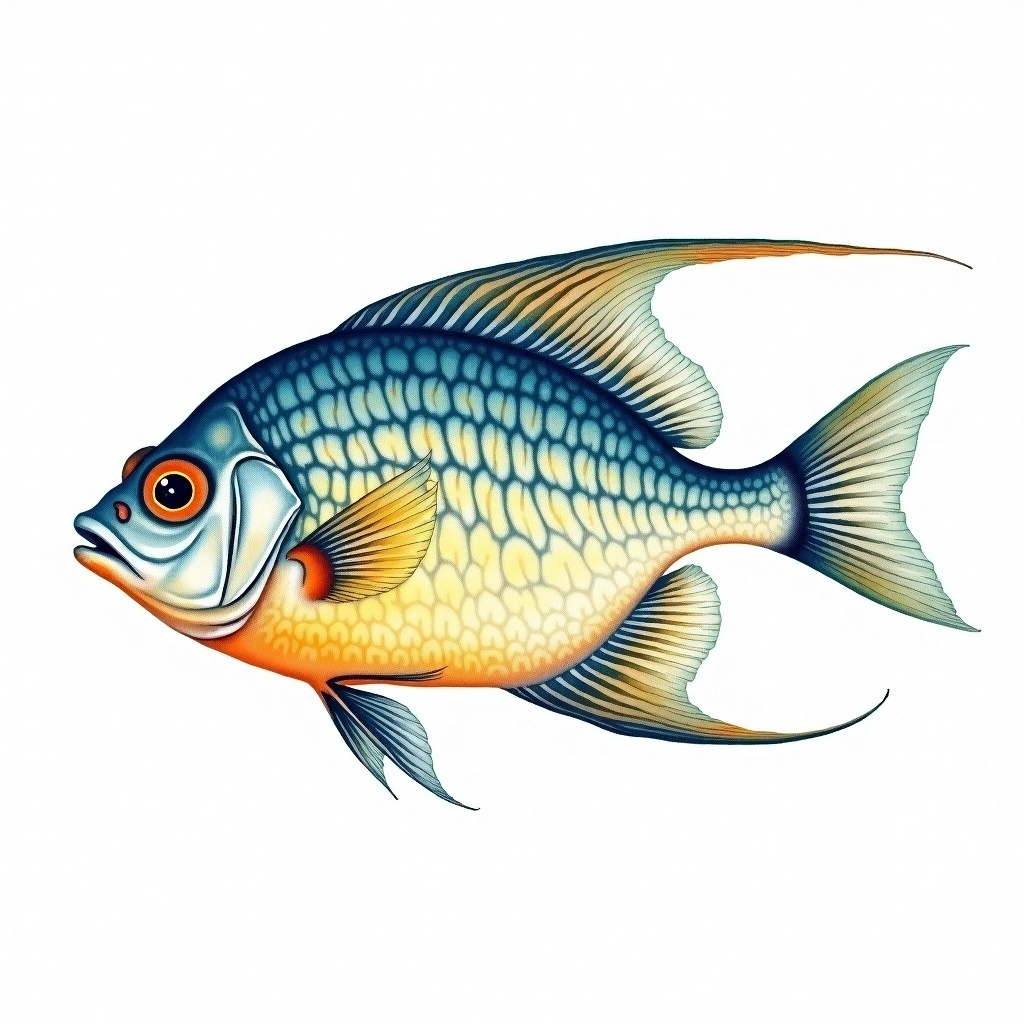
Angelfish
Pterophyllum scalare
Embed This Widget
Add the script tag and a data attribute to embed this widget.
<script src="https://cdn.jsdelivr.net/npm/fishfyi-embed@1/dist/embed.min.js" defer></script>
<div data-fishfyi="fish" data-slug="angelfish"></div>Embed via iframe for maximum compatibility.
<iframe src="https://fishfyi.com/iframe/fish/angelfish/" width="420" height="400" frameborder="0" style="border:0;border-radius:10px;max-width:100%" loading="lazy"></iframe>Paste this URL in WordPress, Medium, or any oEmbed-compatible platform.
https://fishfyi.com/fish/angelfish/Add a dynamic SVG badge to your README or docs.
[](https://fishfyi.com/fish/angelfish/)Use the native HTML custom element.
<script src="https://cdn.jsdelivr.net/npm/fishfyi-embed@1/dist/embed.min.js" defer></script>
<fishfyi-fish slug="angelfish"></fishfyi-fish>Overview
A tall, laterally compressed cichlid of the South American genus Pterophyllum, the freshwater angelfish is recognised at once by its triangular profile and long, trailing dorsal and anal fins. It occurs naturally across the Amazon basin in Peru, Colombia, and Brazil, favouring densely vegetated floodplain swamps and slow, soft, acidic tributaries. Wild fish are silver with four bold black vertical bars, one crossing the eye, while centuries of selective breeding have produced gold, marble, koi, and platinum strains. A semi-aggressive community fish, it reaches about 15 centimetres and needs a tall aquarium of at least 190 litres kept between 24 and 28 degrees Celsius. Breeding pairs are devoted parents, cleaning a vertical surface before laying and guarding the eggs together. It is assessed as Least Concern.
On this page
À propos
The freshwater angelfish is a majestic cichlid with a laterally compressed body and long, flowing dorsal and anal fins. Native to the Amazon basin, it has been selectively bred into numerous color varieties including marble, koi, and platinum.
Physical Description
| Measurement | Value |
|---|---|
| Maximum Length | 15,0 cm |
| Maximum Weight | 0,03 kg |
Coloration
Silver to pale gold body with four bold black vertical bars including one through the eye; tall triangular dorsal and ventral fins are translucent silver; domesticated forms include gold, black, and marbled variants.
Habitat & Distribution
Slow-moving rivers and flooded forests of the Amazon basin, particularly white-water and clear-water rivers. Warm water (24-30°C); inhabits areas with submerged vegetation and driftwood.
Aire de répartition
Native to the Amazon River basin and associated river systems in Peru, Colombia, and Brazil. Inhabits densely vegetated floodplain swamps, flooded igapó forests, and slow tributaries with soft, acidic water.
Conservation Status
Angelfish is classified as Least Concern by the International Union for Conservation of Nature (IUCN).
Comestibilité et gastronomie
Entretien en aquarium
Check aquarium compatibility for Angelfish with other fish species.
Compatibility CheckerTaxonomy
| Ordre | Cichliformes (Cichlids and allies) |
| Famille | Cichlidae (Cichlids) |
| Espèces | Pterophyllum scalare |
Names in Other Languages
| Language | Name |
|---|---|
| Spanish | Escalar |
Foire aux questions
Can you eat Angelfish?
How big does Angelfish get?
Is Angelfish good for aquariums?
Where is Angelfish found?
Is Angelfish endangered?
What family does Angelfish belong to?
Similar Fish
Other species in the Cichlidae family
External Databases
Explore More
Fish Rankings
Discover the largest, heaviest, and most exciting fish species
Nature FYI Family
Explore more wildlife and biodiversity encyclopedias