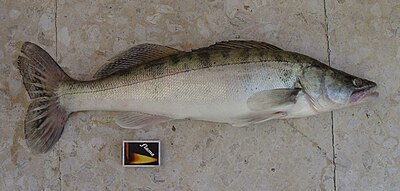
قشر البياض
Sander lucioperca
Embed This Widget
Add the script tag and a data attribute to embed this widget.
<script src="https://cdn.jsdelivr.net/npm/fishfyi-embed@1/dist/embed.min.js" defer></script>
<div data-fishfyi="fish" data-slug="zander"></div>Embed via iframe for maximum compatibility.
<iframe src="https://fishfyi.com/iframe/fish/zander/" width="420" height="400" frameborder="0" style="border:0;border-radius:10px;max-width:100%" loading="lazy"></iframe>Paste this URL in WordPress, Medium, or any oEmbed-compatible platform.
https://fishfyi.com/fish/zander/Add a dynamic SVG badge to your README or docs.
[](https://fishfyi.com/fish/zander/)Use the native HTML custom element.
<script src="https://cdn.jsdelivr.net/npm/fishfyi-embed@1/dist/embed.min.js" defer></script>
<fishfyi-fish slug="zander"></fishfyi-fish>Overview
Often called the European counterpart of the walleye, the zander is a slender, greenish percid whose large, light-gathering eyes make it a crepuscular predator. Marked by eight to ten dark vertical bars and a first dorsal fin of spotted rays, it grows to 1.3 metres in the rivers and large lakes of northern and central Europe and western Asia. It tolerates mildly brackish conditions in the Baltic and Caspian margins and hunts most actively at dawn and dusk. Its lean, firm, almost fat-free white flesh yields easy boneless fillets and is regarded as the finest freshwater eating fish across Central and Eastern Europe. The species is assessed as Least Concern.
On this page
نبذة
The zander is the European equivalent of the walleye and one of the most prized freshwater predators in Europe. Its excellent low-light vision makes it a crepuscular hunter. Its delicate white flesh is considered among the finest of freshwater fish.
Physical Description
| Measurement | Value |
|---|---|
| Maximum Length | 130,0 cm |
| Maximum Weight | 20,0 kg |
| نطاق العمق | 2-30m |
Coloration
Greenish-gray to olive body with 8–10 dark olive-brown vertical bars or saddle blotches; flanks finely mottled; belly whitish; first dorsal fin with dark-spotted rays; large glassy eyes adapted for low light.
Habitat & Distribution
Estuaries
النطاق الجغرافي
Native to river systems and large lakes of northern and central Europe and western Asia, including the Volga, Danube, Rhine, and Baltic Sea drainages. Tolerates mildly brackish conditions in the Baltic and Caspian sea margins.
الدول
Distribution Map
Conservation Status
قشر البياض is classified as Least Concern by the International Union for Conservation of Nature (IUCN).
الصلاحية للأكل والطهي
معلومات الصيد
Taxonomy
| الرتبة | Perciformes (Perch-like fishes) |
| الفصيلة | Percidae (Perches) |
| الأنواع | Sander lucioperca |
Names in Other Languages
| Language | Name |
|---|---|
| Arabic | قشر البياض |
| Chinese (Simplified) | 白梭吻鱸 |
| French | Sandre |
| German | Zander |
| Japanese | ザンダー |
| Korean | 잔더 |
| Russian | обыкновенный судак |
| Spanish | Lucioperca |
| Turkish | Sudak balığı |
الأسئلة الشائعة
Can you eat قشر البياض?
How big does قشر البياض get?
Where is قشر البياض found?
Is قشر البياض endangered?
What family does قشر البياض belong to?
Similar Fish
Other species in the Percidae family
External Databases
Explore More
Fish Rankings
Discover the largest, heaviest, and most exciting fish species
Nature FYI Family
Explore more wildlife and biodiversity encyclopedias