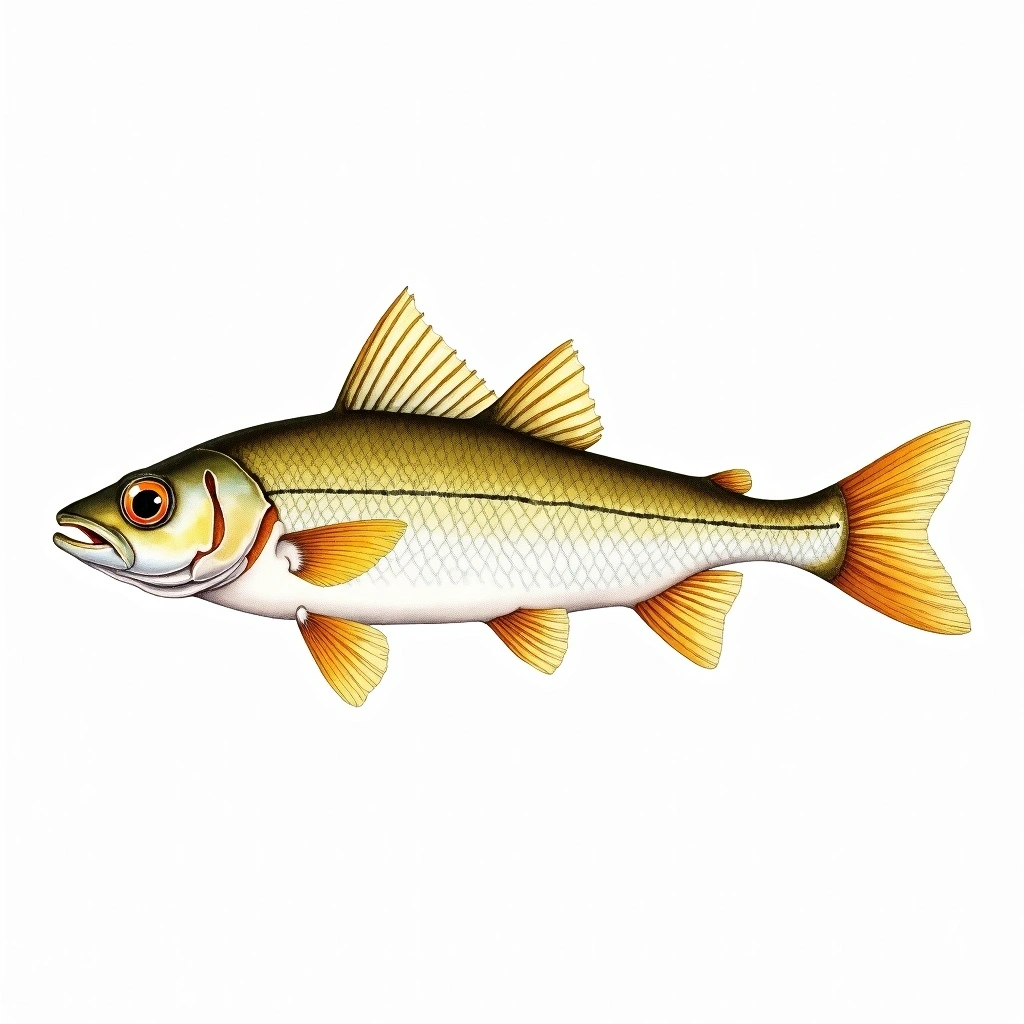
Golden Shiner
Notemigonus crysoleucas
Embed This Widget
Add the script tag and a data attribute to embed this widget.
<script src="https://cdn.jsdelivr.net/npm/fishfyi-embed@1/dist/embed.min.js" defer></script>
<div data-fishfyi="fish" data-slug="golden-shiner"></div>Embed via iframe for maximum compatibility.
<iframe src="https://fishfyi.com/iframe/fish/golden-shiner/" width="420" height="400" frameborder="0" style="border:0;border-radius:10px;max-width:100%" loading="lazy"></iframe>Paste this URL in WordPress, Medium, or any oEmbed-compatible platform.
https://fishfyi.com/fish/golden-shiner/Add a dynamic SVG badge to your README or docs.
[](https://fishfyi.com/fish/golden-shiner/)Use the native HTML custom element.
<script src="https://cdn.jsdelivr.net/npm/fishfyi-embed@1/dist/embed.min.js" defer></script>
<fishfyi-fish slug="golden-shiner"></fishfyi-fish>Overview
No fish is sold more widely as live bait in North America than Notemigonus crysoleucas, raised on hundreds of commercial farms and used chiefly for largemouth bass, crappie and catfish. It reaches 30 cm and 0.3 kg, with a pale olive to golden-yellow body, an iridescent golden-silver sheen along the flanks, a silvery-white belly and a distinctly down-curved lateral line. Native from Quebec and Manitoba south to Texas and Florida, it thrives in weedy ponds, lakes and slow streams and tolerates turbid, warm and mildly brackish water in coastal Atlantic drainages. Too small and bony for the table, it is bred solely for the bait trade. The IUCN Red List assesses it as Least Concern.
On this page
نبذة
The golden shiner is the most widely used baitfish in North America. Raised commercially on hundreds of farms, it is the primary live bait for largemouth bass, crappie, and catfish anglers across the continent.
Physical Description
| Measurement | Value |
|---|---|
| Maximum Length | 30,0 cm |
| Maximum Weight | 0,3 kg |
| نطاق العمق | 10-?m |
Coloration
Pale olive to golden-yellow body with a bright iridescent golden-silver sheen on the flanks; belly silvery-white to pale yellow; fins clear to lightly pigmented yellow; lateral line distinctly curved downward.
Habitat & Distribution
Ponds, lakes, rivers, and streams across eastern North America. Highly adaptable; tolerates turbid, warm, and even brackish water. Often found in dense aquatic vegetation along shallow margins.
النطاق الجغرافي
Native to the eastern United States and southern Canada, from Quebec and Manitoba south to Texas and Florida. Inhabits weedy ponds, lakes, and slow streams; tolerates mild brackish conditions in coastal Atlantic drainages.
Conservation Status
Golden Shiner is classified as Least Concern by the International Union for Conservation of Nature (IUCN).
الصلاحية للأكل والطهي
Taxonomy
| الرتبة | Cypriniformes (Carps and minnows) |
| الفصيلة | Cyprinidae (Carps and minnows) |
| الأنواع | Notemigonus crysoleucas |
الأسئلة الشائعة
Can you eat Golden Shiner?
How big does Golden Shiner get?
Where is Golden Shiner found?
Is Golden Shiner endangered?
What family does Golden Shiner belong to?
Similar Fish
Other species in the Cyprinidae family
External Databases
Explore More
Fish Rankings
Discover the largest, heaviest, and most exciting fish species
Nature FYI Family
Explore more wildlife and biodiversity encyclopedias