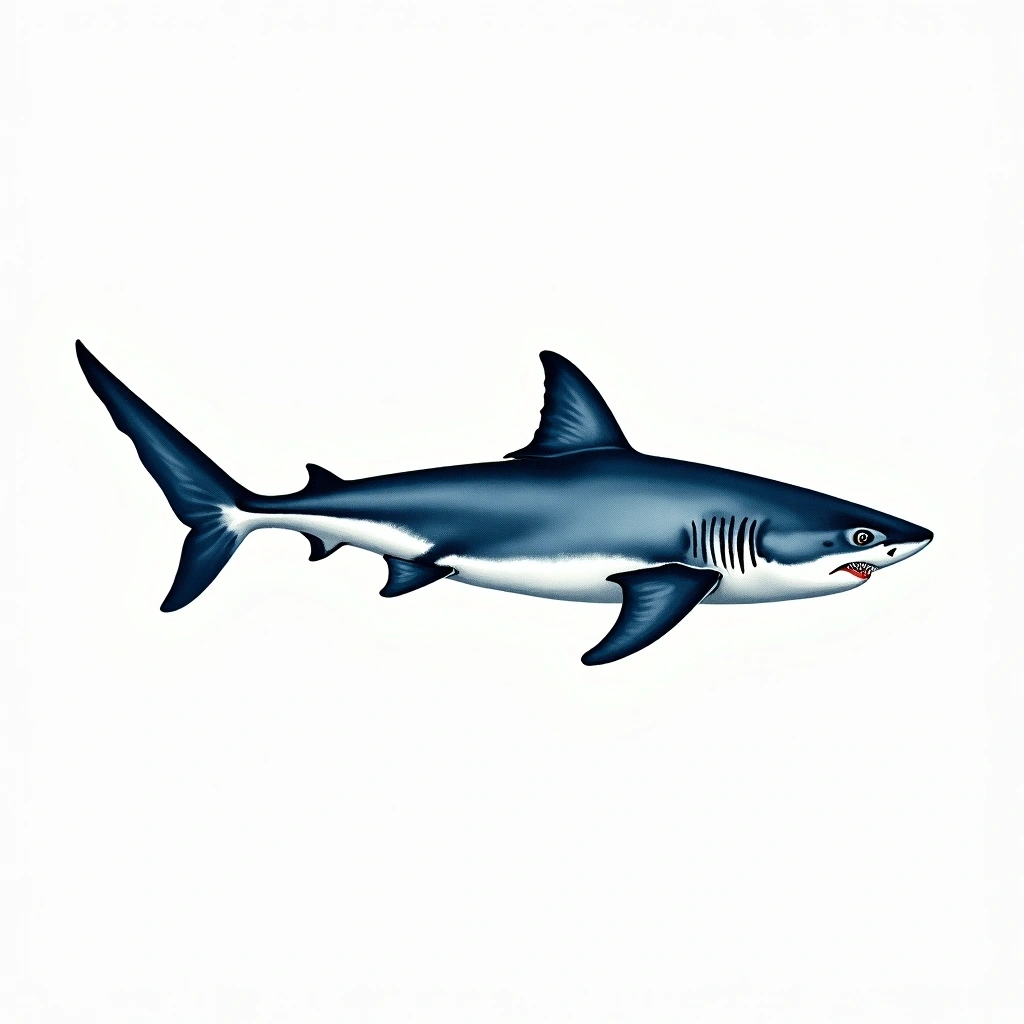
Great White Shark
Carcharodon carcharias
Embed This Widget
Add the script tag and a data attribute to embed this widget.
<script src="https://cdn.jsdelivr.net/npm/fishfyi-embed@1/dist/embed.min.js" defer></script>
<div data-fishfyi="fish" data-slug="great-white-shark"></div>Embed via iframe for maximum compatibility.
<iframe src="https://fishfyi.com/iframe/fish/great-white-shark/" width="420" height="400" frameborder="0" style="border:0;border-radius:10px;max-width:100%" loading="lazy"></iframe>Paste this URL in WordPress, Medium, or any oEmbed-compatible platform.
https://fishfyi.com/fish/great-white-shark/Add a dynamic SVG badge to your README or docs.
[](https://fishfyi.com/fish/great-white-shark/)Use the native HTML custom element.
<script src="https://cdn.jsdelivr.net/npm/fishfyi-embed@1/dist/embed.min.js" defer></script>
<fishfyi-fish slug="great-white-shark"></fishfyi-fish>Overview
The world's largest predatory fish, the great white shark reaches six metres and nearly two tonnes, its slate-gray back meeting a pure white belly along a sharp boundary. It ranges across cool to warm coastal and offshore waters of every major ocean, with well-known aggregations off South Africa, California, South Australia, and New Zealand, between which it makes trans-oceanic journeys. An acute sense of smell can detect a single drop of blood diluted in a hundred litres of water. Despite a fearsome reputation, attacks on people are rare, and the species is assessed as Vulnerable and protected in many jurisdictions. Its flesh is seldom eaten and consumption is discouraged.
On this page
简介
The great white shark is the world's largest predatory fish. Found in coastal surface waters of all major oceans, it can detect a single drop of blood in 100 liters of water. Despite its fearsome reputation, attacks on humans are rare.
Physical Description
| Measurement | Value |
|---|---|
| Maximum Length | 600.0 cm |
| Maximum Weight | 1905.0 kg |
| 栖息水深 | 0-1280m |
Coloration
Classic countershaded coloration: slate-gray to charcoal-brown dorsal surface with a sharply defined boundary to a pure white ventral surface; pectoral fin tips dusky to black.
Habitat & Distribution
Neritic, estuaries
地理分布
Cosmopolitan in cool to warm coastal and offshore waters of all major oceans. Key aggregation sites include South Africa, California, South Australia, and New Zealand. Makes trans-oceanic migrations between ocean basins.
Conservation Status
Great White Shark is classified as Vulnerable by the International Union for Conservation of Nature (IUCN).
Great White Shark faces significant threats to its wild populations.
食用性与烹饪
钓鱼信息
Taxonomy
| 目 | Lamniformes (Mackerel sharks) |
| 科 | Lamnidae (Mackerel sharks) |
| 物种 | Carcharodon carcharias |
Names in Other Languages
| Language | Name |
|---|---|
| French | Grand requin blanc |
| Spanish | Jaquetón blanco |
常见问题
Can you eat Great White Shark?
How big does Great White Shark get?
Where is Great White Shark found?
Is Great White Shark endangered?
What family does Great White Shark belong to?
Similar Fish
Other species in the Lamnidae family
External Databases
Explore More
Fish Rankings
Discover the largest, heaviest, and most exciting fish species
Nature FYI Family
Explore more wildlife and biodiversity encyclopedias