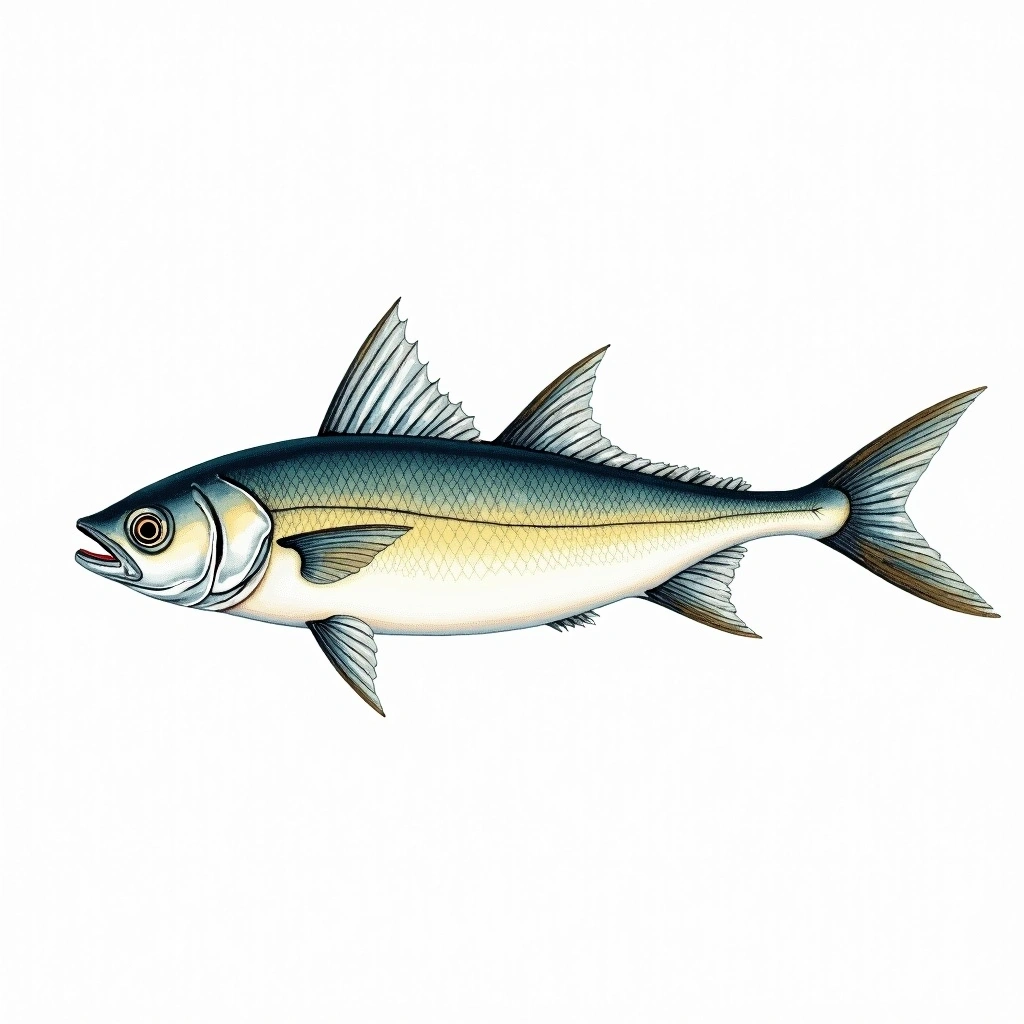
Atlantic Herring
Clupea harengus
Embed This Widget
Add the script tag and a data attribute to embed this widget.
<script src="https://cdn.jsdelivr.net/npm/fishfyi-embed@1/dist/embed.min.js" defer></script>
<div data-fishfyi="fish" data-slug="atlantic-herring"></div>Embed via iframe for maximum compatibility.
<iframe src="https://fishfyi.com/iframe/fish/atlantic-herring/" width="420" height="400" frameborder="0" style="border:0;border-radius:10px;max-width:100%" loading="lazy"></iframe>Paste this URL in WordPress, Medium, or any oEmbed-compatible platform.
https://fishfyi.com/fish/atlantic-herring/Add a dynamic SVG badge to your README or docs.
[](https://fishfyi.com/fish/atlantic-herring/)Use the native HTML custom element.
<script src="https://cdn.jsdelivr.net/npm/fishfyi-embed@1/dist/embed.min.js" defer></script>
<fishfyi-fish slug="atlantic-herring"></fishfyi-fish>Overview
Few marine fishes are as numerous as the Atlantic herring, which forms mid-water schools of billions across the northern North Atlantic and adjacent Arctic seas. A slender, iridescent-silver clupeid reaching about 45 centimetres, it is a keystone forage species linking plankton to the predators, seabirds, and fisheries that depend on it. Highly migratory, it moves seasonally between feeding and spawning grounds on continental-shelf banks from Canada to Iceland, the North Sea, and the Baltic. Its soft, oily, omega-3-rich flesh has shaped Northern European life, financing medieval trade routes and appearing pickled, smoked, or salted as rollmops and Bismarck herring. Managed carefully for its ecological weight, the population is assessed as Least Concern.
On this page
简介
The Atlantic herring is one of the most abundant fish species on Earth, forming massive schools of billions of individuals. It has played a crucial role in European history, fueling trade routes and even wars.
Physical Description
| Measurement | Value |
|---|---|
| Maximum Length | 45.0 cm |
| Maximum Weight | 1.1 kg |
| 栖息水深 | 0-364m |
Coloration
Deep blue-green to teal back with brilliant iridescent silver flanks and white belly; no spots or bars; scales shed easily; fins are translucent to pale; single dorsal fin positioned mid-body.
Habitat & Distribution
Pelagic, open ocean in the North Atlantic, from Arctic to subtropical latitudes. Highly migratory, schooling in surface to mid-water depths (0-200m). Undertakes large seasonal migrations. Critical forage fish.
地理分布
Northern North Atlantic and adjacent Arctic seas, from the eastern seaboard of Canada to Iceland, the North Sea, Baltic Sea, and Barents Sea. Forms massive mid-water schools on continental shelf feeding grounds.
Distribution Map
Conservation Status
Atlantic Herring is classified as Least Concern by the International Union for Conservation of Nature (IUCN).
食用性与烹饪
钓鱼信息
Taxonomy
| 目 | Clupeiformes (Herrings & Sardines) |
| 科 | Clupeidae (Herrings and sardines) |
| 物种 | Clupea harengus |
Names in Other Languages
| Language | Name |
|---|---|
| French | Hareng de l'Atlantique |
| Spanish | Arenque del Atlántico |
常见问题
Can you eat Atlantic Herring?
How big does Atlantic Herring get?
Where is Atlantic Herring found?
Is Atlantic Herring endangered?
What family does Atlantic Herring belong to?
Similar Fish
Other species in the Clupeidae family
External Databases
Explore More
Fish Rankings
Discover the largest, heaviest, and most exciting fish species
Nature FYI Family
Explore more wildlife and biodiversity encyclopedias