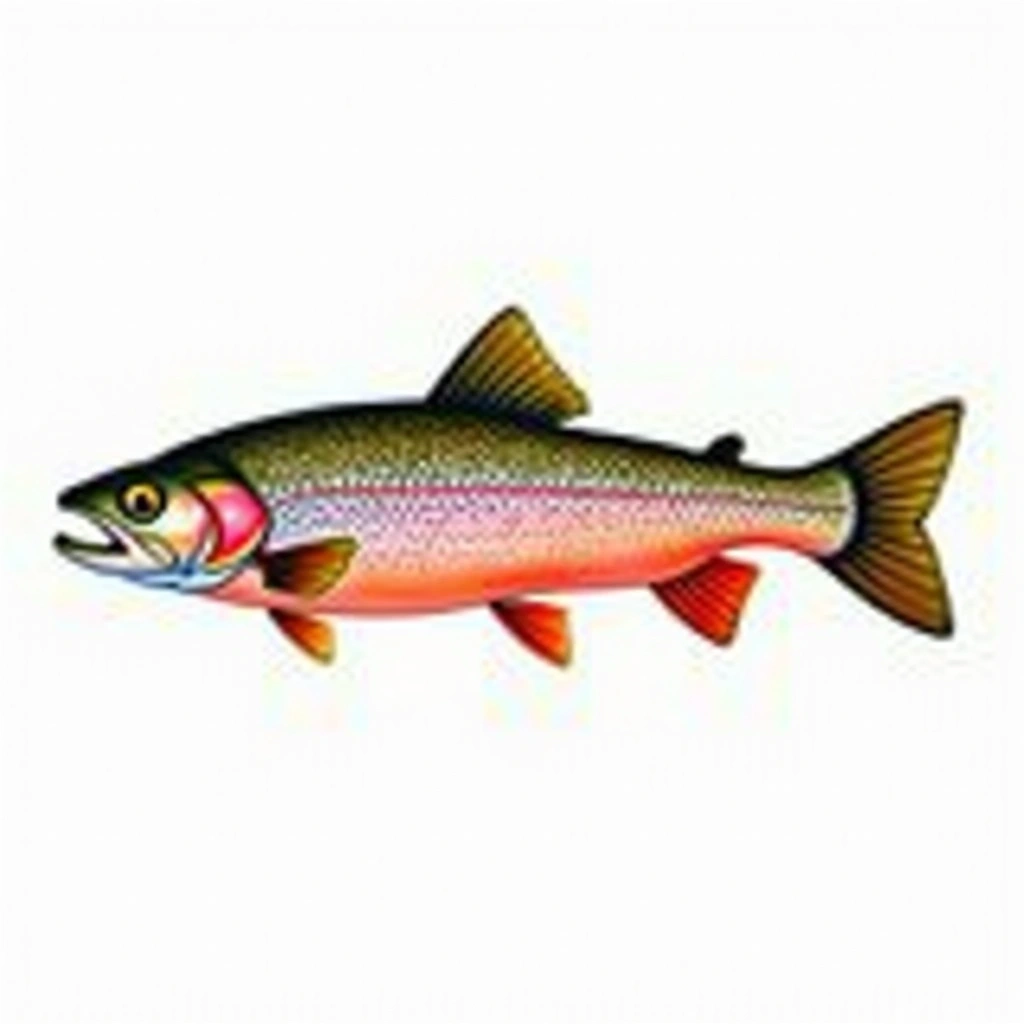
Rainbow Trout
Oncorhynchus mykiss
Embed This Widget
Add the script tag and a data attribute to embed this widget.
<script src="https://cdn.jsdelivr.net/npm/fishfyi-embed@1/dist/embed.min.js" defer></script>
<div data-fishfyi="fish" data-slug="rainbow-trout"></div>Embed via iframe for maximum compatibility.
<iframe src="https://fishfyi.com/iframe/fish/rainbow-trout/" width="420" height="400" frameborder="0" style="border:0;border-radius:10px;max-width:100%" loading="lazy"></iframe>Paste this URL in WordPress, Medium, or any oEmbed-compatible platform.
https://fishfyi.com/fish/rainbow-trout/Add a dynamic SVG badge to your README or docs.
[](https://fishfyi.com/fish/rainbow-trout/)Use the native HTML custom element.
<script src="https://cdn.jsdelivr.net/npm/fishfyi-embed@1/dist/embed.min.js" defer></script>
<fishfyi-fish slug="rainbow-trout"></fishfyi-fish>Overview
Marked by a vivid pink-to-crimson stripe along densely black-spotted flanks, the rainbow trout is a Pacific salmonid native to cold rivers of western North America from Alaska to northern Mexico. Its sea-run form, the steelhead, migrates between coastal rivers and the open ocean, while resident fish stay in cool, oxygen-rich streams over gravel. Widely introduced across the globe, it is prized by anglers for acrobatic leaps and is a mainstay of freshwater aquaculture. Reaching 1.2 metres, it offers delicate, mildly sweet flesh ranging from white to pink, excellent pan-fried, baked, or smoked. Adaptable and widespread, the species is assessed as Least Concern.
On this page
Sobre
The rainbow trout is native to cold-water tributaries of the Pacific Ocean in Asia and North America. Widely introduced worldwide, it is prized by anglers for its acrobatic leaps and beautiful coloration.
Physical Description
| Measurement | Value |
|---|---|
| Maximum Length | 120,0 cm |
| Maximum Weight | 25,4 kg |
| Faixa de Profundidade | 0-200m |
Coloration
Steel-blue to olive-green back with a vivid iridescent pink-to-crimson lateral stripe, flanks densely speckled with small black spots across body and fins.
Habitat & Distribution
Native to cool, clear rivers and streams of western North America; introduced worldwide. Prefers cold, oxygen-rich water (10-18°C) over gravel and cobble at 0-500m elevation. Migrates upstream to spawn.
Distribuição Geográfica
Native to cold rivers and coastal waters of western North America from Alaska to northern Mexico. Anadromous steelhead run migrate between Pacific coastal rivers and the open ocean.
Países
Distribution Map
Conservation Status
Rainbow Trout is classified as Least Concern by the International Union for Conservation of Nature (IUCN).
Comestibilidade e Culinária
Informações de Pesca
Temporadas de Pesca
Taxonomy
| Ordem | Salmoniformes (Salmon and trout) |
| Família | Salmonidae (Salmons and trouts) |
| Espécies | Oncorhynchus mykiss |
Names in Other Languages
| Language | Name |
|---|---|
| French | Truite arc-en-ciel |
| Spanish | Trucha arco iris |
Perguntas Frequentes
Can you eat Rainbow Trout?
How big does Rainbow Trout get?
Where is Rainbow Trout found?
Is Rainbow Trout endangered?
What family does Rainbow Trout belong to?
Similar Fish
Other species in the Salmonidae family
External Databases
Explore More
Fish Rankings
Discover the largest, heaviest, and most exciting fish species
Nature FYI Family
Explore more wildlife and biodiversity encyclopedias