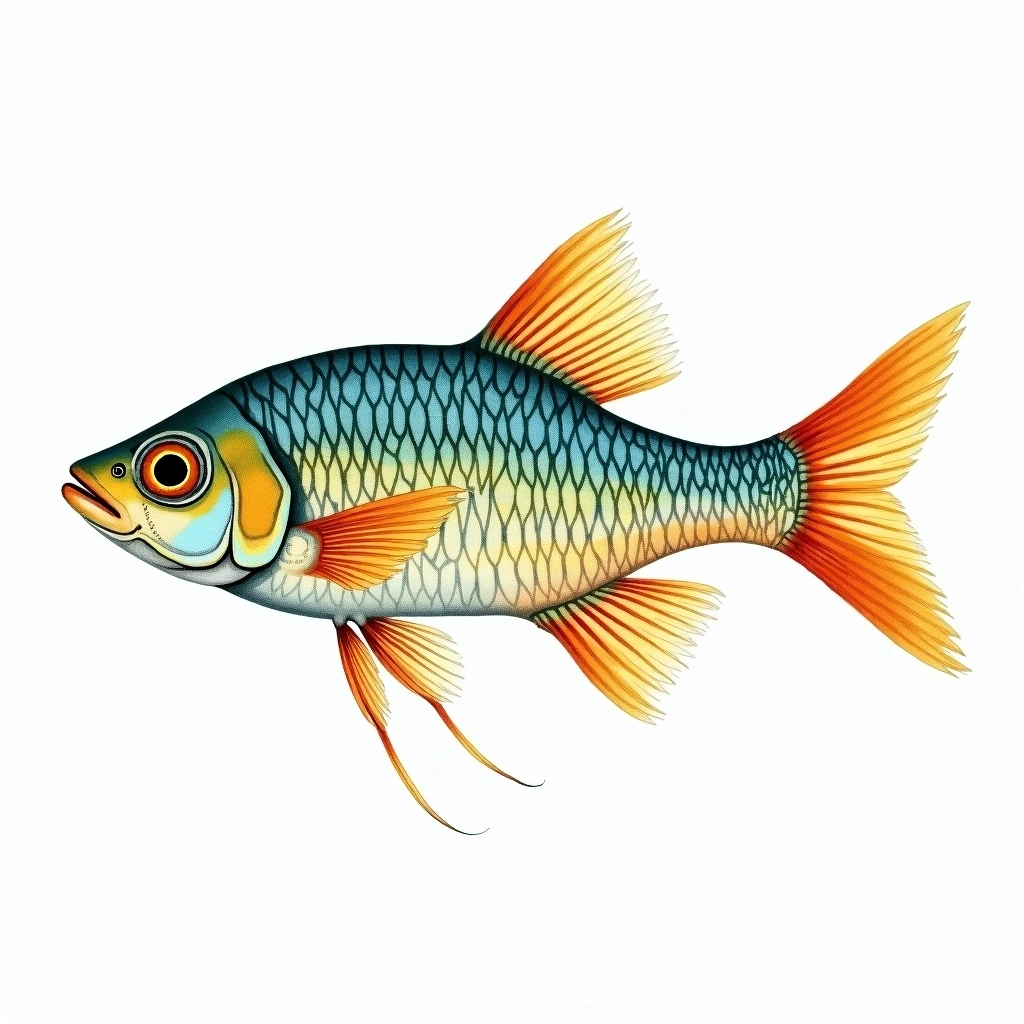
Dwarf Gourami
Trichogaster lalius
Embed This Widget
Add the script tag and a data attribute to embed this widget.
<script src="https://cdn.jsdelivr.net/npm/fishfyi-embed@1/dist/embed.min.js" defer></script>
<div data-fishfyi="fish" data-slug="dwarf-gourami"></div>Embed via iframe for maximum compatibility.
<iframe src="https://fishfyi.com/iframe/fish/dwarf-gourami/" width="420" height="400" frameborder="0" style="border:0;border-radius:10px;max-width:100%" loading="lazy"></iframe>Paste this URL in WordPress, Medium, or any oEmbed-compatible platform.
https://fishfyi.com/fish/dwarf-gourami/Add a dynamic SVG badge to your README or docs.
[](https://fishfyi.com/fish/dwarf-gourami/)Use the native HTML custom element.
<script src="https://cdn.jsdelivr.net/npm/fishfyi-embed@1/dist/embed.min.js" defer></script>
<fishfyi-fish slug="dwarf-gourami"></fishfyi-fish>Overview
A brightly striped labyrinth fish of slow South Asian waters, the dwarf gourami carries alternating diagonal bands of red-orange and iridescent turquoise across its flanks. Native to the vegetated rivers, ponds, and rice paddies of West Bengal, Assam, Bangladesh, and Pakistan, it reaches about nine centimetres. Its pelvic fins have evolved into long, thread-like feelers used to taste and sense its surroundings, while a labyrinth organ allows it to breathe air drawn from the surface. Males are territorial and build elaborate floating bubble nests to spawn and guard their eggs. Peaceful and easy to keep in planted aquaria of around 40 litres, the species is assessed as Least Concern.
On this page
소개
The dwarf gourami is a brightly colored labyrinth fish native to the slow-moving waters of South Asia. Males build elaborate bubble nests at the surface for spawning. Its pelvic fins have evolved into long, thread-like feelers used to sense the environment.
Physical Description
| Measurement | Value |
|---|---|
| Maximum Length | 9.0 cm |
| Maximum Weight | 0.005 kg |
Coloration
Males show brilliant alternating diagonal red-orange and iridescent turquoise-blue stripes across the flanks; dorsal and anal fins have red and blue streaking; throat and belly vivid electric blue.
Habitat & Distribution
Slow-moving rivers, ponds, and ditches of Bangladesh, India, and Pakistan. Shallow, warm, densely vegetated freshwater (22-28°C). Males highly territorial and build bubble nests among floating plants.
분포 지역
Native to the rivers and floodplains of West Bengal, Assam, Bangladesh, and parts of Pakistan. Found in densely vegetated slow streams, ponds, and flooded rice paddies throughout the Indo-Gangetic plain.
Conservation Status
Dwarf Gourami is classified as Least Concern by the International Union for Conservation of Nature (IUCN).
식용 가능성 및 요리 정보
수족관 사육 정보
Check aquarium compatibility for Dwarf Gourami with other fish species.
Compatibility CheckerTaxonomy
| 목(目) | Anabantiformes (Labyrinth fishes) |
| 과(科) | Osphronemidae (Gouramis) |
| 종 | Trichogaster lalius |
Names in Other Languages
| Language | Name |
|---|---|
| Spanish | Gurami enano |
자주 묻는 질문
Can you eat Dwarf Gourami?
How big does Dwarf Gourami get?
Is Dwarf Gourami good for aquariums?
Where is Dwarf Gourami found?
Is Dwarf Gourami endangered?
What family does Dwarf Gourami belong to?
Similar Fish
Other species in the Osphronemidae family
External Databases
Explore More
Fish Rankings
Discover the largest, heaviest, and most exciting fish species
Nature FYI Family
Explore more wildlife and biodiversity encyclopedias