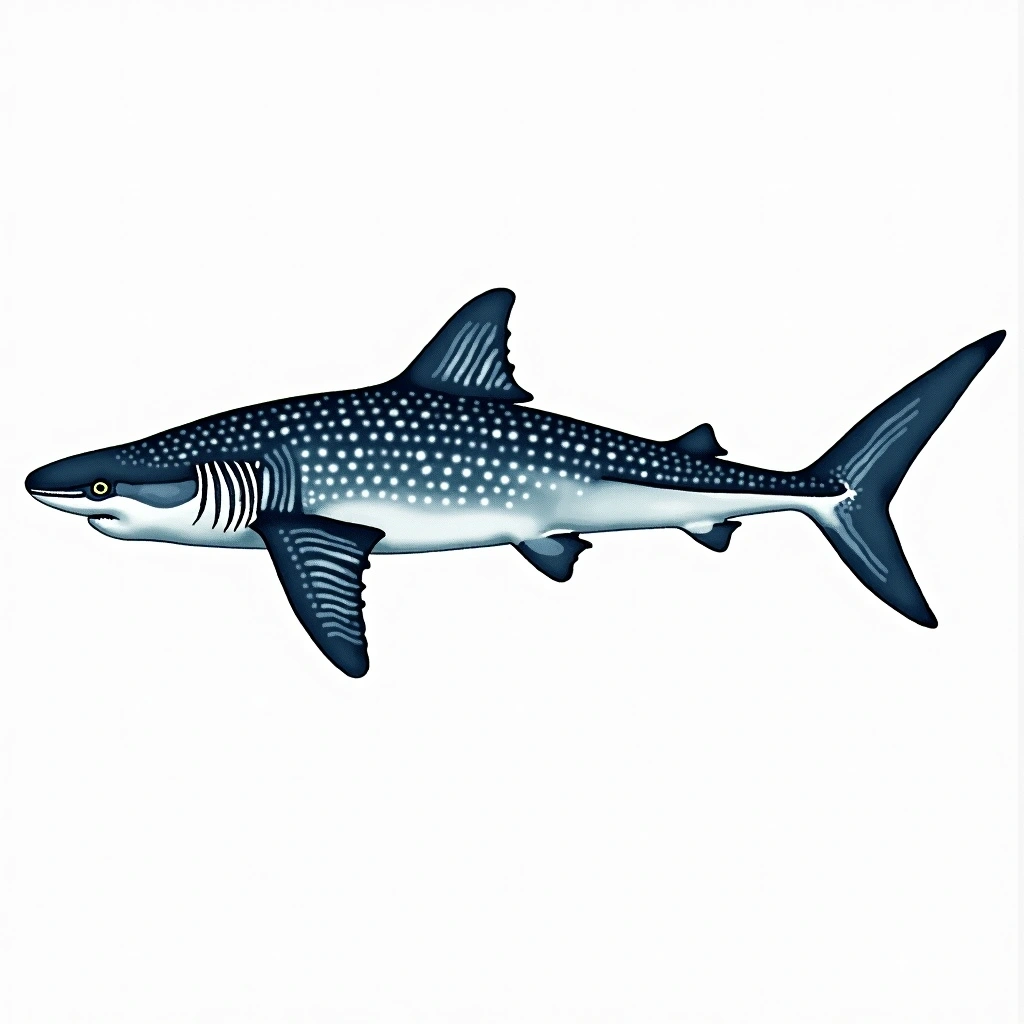
Whale Shark
Rhincodon typus
Embed This Widget
Add the script tag and a data attribute to embed this widget.
<script src="https://cdn.jsdelivr.net/npm/fishfyi-embed@1/dist/embed.min.js" defer></script>
<div data-fishfyi="fish" data-slug="whale-shark"></div>Embed via iframe for maximum compatibility.
<iframe src="https://fishfyi.com/iframe/fish/whale-shark/" width="420" height="400" frameborder="0" style="border:0;border-radius:10px;max-width:100%" loading="lazy"></iframe>Paste this URL in WordPress, Medium, or any oEmbed-compatible platform.
https://fishfyi.com/fish/whale-shark/Add a dynamic SVG badge to your README or docs.
[](https://fishfyi.com/fish/whale-shark/)Use the native HTML custom element.
<script src="https://cdn.jsdelivr.net/npm/fishfyi-embed@1/dist/embed.min.js" defer></script>
<fishfyi-fish slug="whale-shark"></fishfyi-fish>Overview
The largest living fish, the whale shark reaches up to 18 metres yet feeds gently on plankton, fish eggs, and small fish by cruising with its cavernous mouth agape. Its dark gray back is patterned with a distinctive checkerboard of pale spots and stripes unique to each individual, allowing researchers to identify particular animals. Pantropical between about 30 degrees north and 35 degrees south, it aggregates seasonally at feeding sites such as Australia's Ningaloo Reef and the Gulf of Tadjoura off Djibouti. Reaching over 21 tonnes, it is a slow-maturing, migratory shark now assessed as Endangered and protected under CITES Appendix II, so its consumption is illegal in many countries.
On this page
概要
The whale shark is the largest living fish species, reaching lengths of up to 18 meters. Despite its enormous size, it is a gentle filter feeder that consumes plankton, fish eggs, and small fish by swimming with its wide mouth open.
Physical Description
| Measurement | Value |
|---|---|
| Maximum Length | 1800.0 cm |
| Maximum Weight | 21500.0 kg |
| 生息水深 | 0-1928m |
Coloration
Dark gray to blue-gray back covered with a distinctive checkerboard grid of pale white or cream spots and transverse stripes; belly white; the unique spot pattern is unique to each individual.
Habitat & Distribution
Neritic, coral reefs
分布域
Pantropical in open oceanic and coastal waters between 30°N and 35°S. Aggregates seasonally at feeding sites including Ningaloo Reef in Western Australia, the Gulf of Mexico, and the Gulf of Tadjoura in Djibouti.
Distribution Map
Conservation Status
Whale Shark is classified as Endangered by the International Union for Conservation of Nature (IUCN).
Whale Shark faces significant threats to its wild populations.
食用・料理情報
Taxonomy
| 目 | Orectolobiformes (Carpet sharks) |
| 科 | Rhincodontidae (Whale sharks) |
| 種 | Rhincodon typus |
Names in Other Languages
| Language | Name |
|---|---|
| French | Requin baleine |
| Spanish | Tiburón ballena |
よくある質問
Can you eat Whale Shark?
How big does Whale Shark get?
Where is Whale Shark found?
Is Whale Shark endangered?
What family does Whale Shark belong to?
External Databases
Explore More
Fish Rankings
Discover the largest, heaviest, and most exciting fish species
Nature FYI Family
Explore more wildlife and biodiversity encyclopedias