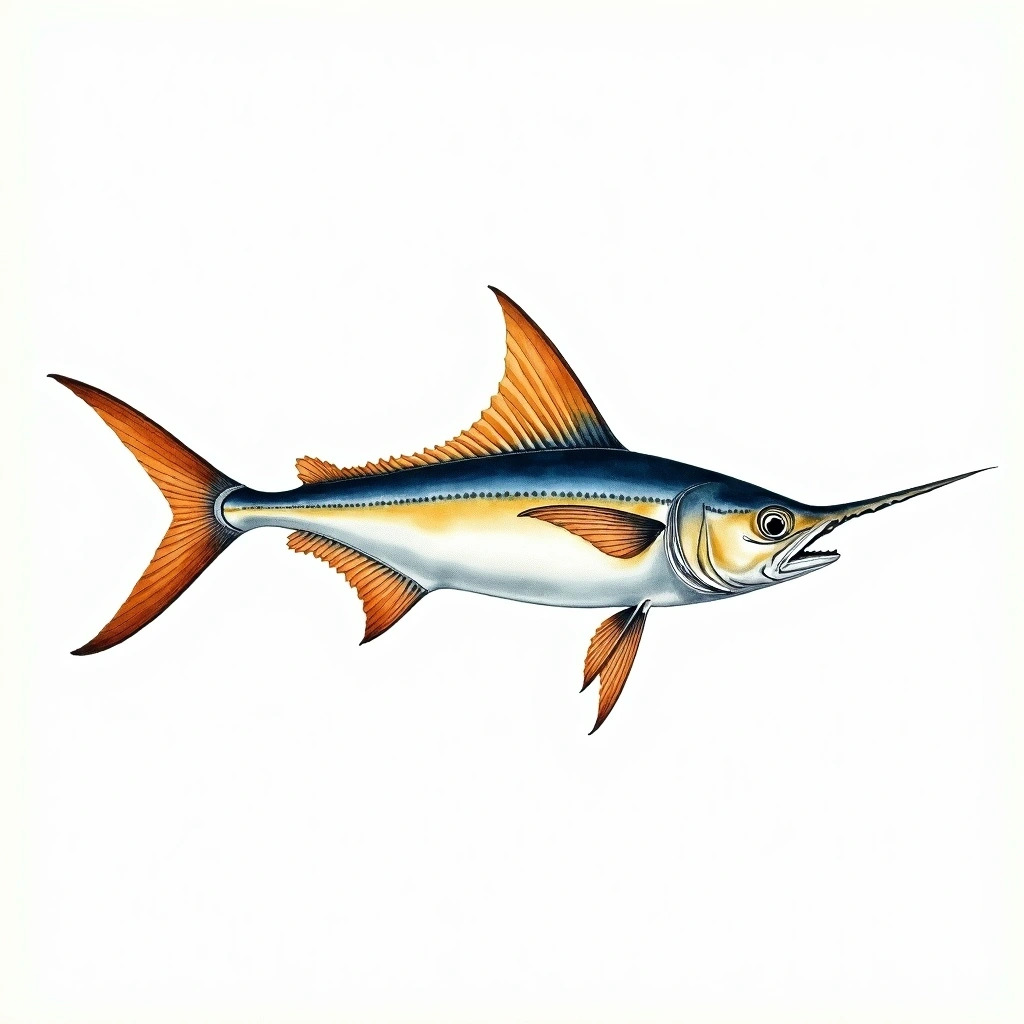
Swordfish
Xiphias gladius
Embed This Widget
Add the script tag and a data attribute to embed this widget.
<script src="https://cdn.jsdelivr.net/npm/fishfyi-embed@1/dist/embed.min.js" defer></script>
<div data-fishfyi="fish" data-slug="swordfish"></div>Embed via iframe for maximum compatibility.
<iframe src="https://fishfyi.com/iframe/fish/swordfish/" width="420" height="400" frameborder="0" style="border:0;border-radius:10px;max-width:100%" loading="lazy"></iframe>Paste this URL in WordPress, Medium, or any oEmbed-compatible platform.
https://fishfyi.com/fish/swordfish/Add a dynamic SVG badge to your README or docs.
[](https://fishfyi.com/fish/swordfish/)Use the native HTML custom element.
<script src="https://cdn.jsdelivr.net/npm/fishfyi-embed@1/dist/embed.min.js" defer></script>
<fishfyi-fish slug="swordfish"></fishfyi-fish>Overview
Recognised at once by its long, flattened bill, the swordfish is a powerful, highly migratory predator of temperate and tropical seas worldwide. A solitary open-ocean hunter, it makes deep vertical migrations, descending below 600 metres and reaching depths past 2,800, aided by a specialised organ that warms its eyes and brain for sharper vision in cold, dark water. Its dark, leathery, scaleless body reaches over 4.5 metres and 650 kilograms. Dense and steak-like, its mild, faintly sweet flesh is ideal grilled, broiled, or seared with citrus. Broadly distributed and managed across ocean basins, the species is assessed as Least Concern.
On this page
About
The swordfish is a highly migratory pelagic predator recognized by its long, flat, pointed bill. It can dive to depths exceeding 2,800 meters and possesses a specialized organ that heats its eyes and brain for improved vision in cold, deep water.
Physical Description
| Measurement | Value |
|---|---|
| Maximum Length | 455.0 cm |
| Maximum Weight | 650.0 kg |
| Depth Range | 0-2878m |
Coloration
Dark brown to blackish-purple back contrasting sharply with a pale cream-white belly; sides are dull bronze-brown; large crescent-shaped tail fin is dark; skin scaleless and leathery.
Habitat & Distribution
Oceanic and neritic zones worldwide in temperate and tropical seas; surface to 650m. Highly migratory, following prey into cold, productive upwelling zones. Rarely found near shores; solitary open-ocean predator.
Geographic Range
Cosmopolitan in temperate and tropical oceans worldwide, including the Mediterranean Sea, Atlantic, Indian, and Pacific oceans. Makes deep vertical migrations between surface feeding and depths exceeding 600 m.
Countries
Distribution Map
Conservation Status
Swordfish is classified as Least Concern by the International Union for Conservation of Nature (IUCN).
Edibility & Culinary
Fishing Information
Fishing Seasons
Taxonomy
| Order | Istiophoriformes (Marlins and swordfish) |
| Family | Xiphiidae (Swordfish) |
| Species | Xiphias gladius |
Names in Other Languages
| Language | Name |
|---|---|
| French | Espadon |
| Spanish | Pez espada |
Frequently Asked Questions
Can you eat Swordfish?
How big does Swordfish get?
Where is Swordfish found?
Is Swordfish endangered?
What family does Swordfish belong to?
External Databases
Explore More
Fish Rankings
Discover the largest, heaviest, and most exciting fish species
Nature FYI Family
Explore more wildlife and biodiversity encyclopedias