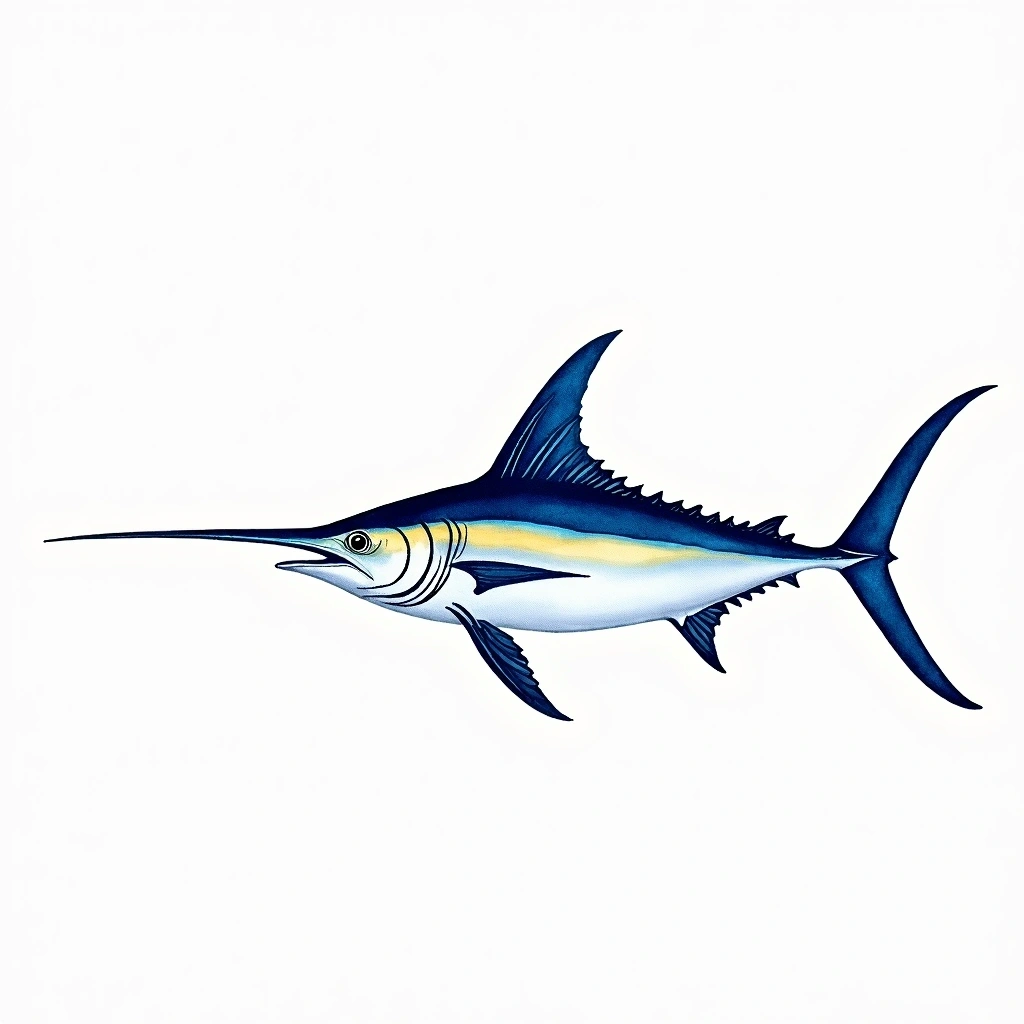
Blue Marlin
Makaira nigricans
Embed This Widget
Add the script tag and a data attribute to embed this widget.
<script src="https://cdn.jsdelivr.net/npm/fishfyi-embed@1/dist/embed.min.js" defer></script>
<div data-fishfyi="fish" data-slug="blue-marlin"></div>Embed via iframe for maximum compatibility.
<iframe src="https://fishfyi.com/iframe/fish/blue-marlin/" width="420" height="400" frameborder="0" style="border:0;border-radius:10px;max-width:100%" loading="lazy"></iframe>Paste this URL in WordPress, Medium, or any oEmbed-compatible platform.
https://fishfyi.com/fish/blue-marlin/Add a dynamic SVG badge to your README or docs.
[](https://fishfyi.com/fish/blue-marlin/)Use the native HTML custom element.
<script src="https://cdn.jsdelivr.net/npm/fishfyi-embed@1/dist/embed.min.js" defer></script>
<fishfyi-fish slug="blue-marlin"></fishfyi-fish>Overview
A pinnacle of big-game fishing, the blue marlin is a circumglobal billfish of tropical and subtropical blue water that can exceed five metres and 636 kilograms. Its cobalt-blue back, silver belly, and fifteen or more pale vertical bars fade rapidly after death, when the vivid colours drain away. Ranging from the Gulf Stream and Caribbean to the equatorial Indo-Pacific, it follows warm currents and thermoclines and spawns in the open ocean. Females grow far larger than males, and hooked fish are renowned for towering aerial leaps. Assessed as Vulnerable, it yields firm, moderately fatty meat used in Hawaii as smoked marlin, though consumption is tempered by its conservation status.
On this page
About
The blue marlin is the pinnacle of big-game fishing. Found in tropical and temperate Atlantic and Indo-Pacific waters, it can exceed 500 kg and is known for spectacular aerial displays when hooked.
Physical Description
| Measurement | Value |
|---|---|
| Maximum Length | 500.0 cm |
| Maximum Weight | 636.0 kg |
| Depth Range | 0-1000m |
Coloration
Deep cobalt-blue back transitioning to silvery-white belly; flanks display 15 or more pale vertical iridescent bars that fade rapidly after death; dorsal fin vivid cobalt.
Habitat & Distribution
Open ocean (epipelagic to mesopelagic, 0-200m) in tropical and subtropical Atlantic, Pacific, and Indian Oceans. Migratory; follows warm currents and thermoclines. Spawns in open oceanic waters.
Geographic Range
Circumglobal in tropical and subtropical Atlantic, Indian, and Pacific oceans. Highly migratory, frequenting open blue-water environments from the Gulf Stream and Caribbean to the equatorial Indo-Pacific.
Conservation Status
Blue Marlin is classified as Vulnerable by the International Union for Conservation of Nature (IUCN).
Blue Marlin faces significant threats to its wild populations.
Edibility & Culinary
Fishing Information
Fishing Seasons
Taxonomy
| Order | Istiophoriformes (Marlins and swordfish) |
| Family | Istiophoridae (Marlins and sailfish) |
| Species | Makaira nigricans |
Names in Other Languages
| Language | Name |
|---|---|
| French | Makaire bleu |
| Spanish | Aguja azul |
Frequently Asked Questions
Can you eat Blue Marlin?
How big does Blue Marlin get?
Where is Blue Marlin found?
Is Blue Marlin endangered?
What family does Blue Marlin belong to?
Similar Fish
Other species in the Istiophoridae family
External Databases
Explore More
Fish Rankings
Discover the largest, heaviest, and most exciting fish species
Nature FYI Family
Explore more wildlife and biodiversity encyclopedias